Most First-Timers Plan Too Much

The biggest mistake in charter itinerary planning is trying to see everything. You look at the map, count the islands, and plan to visit eight of them in seven days. On paper, it works. In reality, you spend every day motoring for 6 hours, arrive exhausted, and never properly enjoy any of the stops.
The best charter itineraries are short on distance and long on time at anchor. You want to arrive at each destination by lunchtime, not at sunset.
The 25-Mile Rule
Plan for a maximum of 25 nautical miles per day. At a sailing speed of 5 to 6 knots, that is 4 to 5 hours of passage. On a catamaran under motor in calm conditions (6 to 7 knots), it is closer to 3.5 to 4 hours.
This leaves the entire afternoon free for swimming, exploring, snorkelling, dinghy trips to shore, and simply enjoying the anchorage. That is the point of a charter. The sailing is the transport, not the destination.
Some days should be even shorter. A 10-mile hop to a neighbouring bay takes 2 hours and gives you an entire day at your destination. Build in at least one "lazy day" with a short or zero transit, especially mid-week when people are tired.
Exception: One longer passage of 30 to 40 miles is fine if it gets you somewhere special and you start early. Leave at 7am, arrive by 1pm. But do not plan two long days in a row.
Step 1: Start with the Non-Negotiables
Before plotting routes, ask your group:
- What do we absolutely want to see? Maybe it is Hvar town in Croatia, Cabrera island in Mallorca, or the caldera in Santorini. Start with 2 to 3 must-see stops and build around them.
- What do we want to do? Snorkelling? Restaurants? History? Nightlife? This shapes whether you anchor in quiet bays or moor in towns.
- Is anyone prone to seasickness? If yes, keep passages short and choose sheltered waters.
- Are there children on board? Plan even shorter days (15 to 20 miles max) with beaches at each stop.
Step 2: Plot Your Route Shape
Most charter itineraries follow one of three patterns:
Out and back. You start and end at the same base. Sail one direction for 3 to 4 days, then work your way back. This is the most common and most flexible. If the weather changes, you have multiple routes home.
One-way. You start at one base and end at another. Popular in Croatia (Split to Dubrovnik) and Greece (Lefkada to Corfu). One-way charters give you more distance and variety but cost extra (a "delivery fee" of 200 to 500 euros for repositioning the yacht).
Star pattern. You stay in one area and make day trips from a central base. Good for groups who find a spot they love and want to come back to each evening. Less common but works well in island clusters like the Saronic Gulf.
Whatever shape you choose, always plan to be back at the charter base by the second-to-last day (usually Thursday if your charter ends Saturday). That gives you a buffer day for weather delays and avoids a stressful final-day rush.
Step 3: Balance Marinas with Anchorages
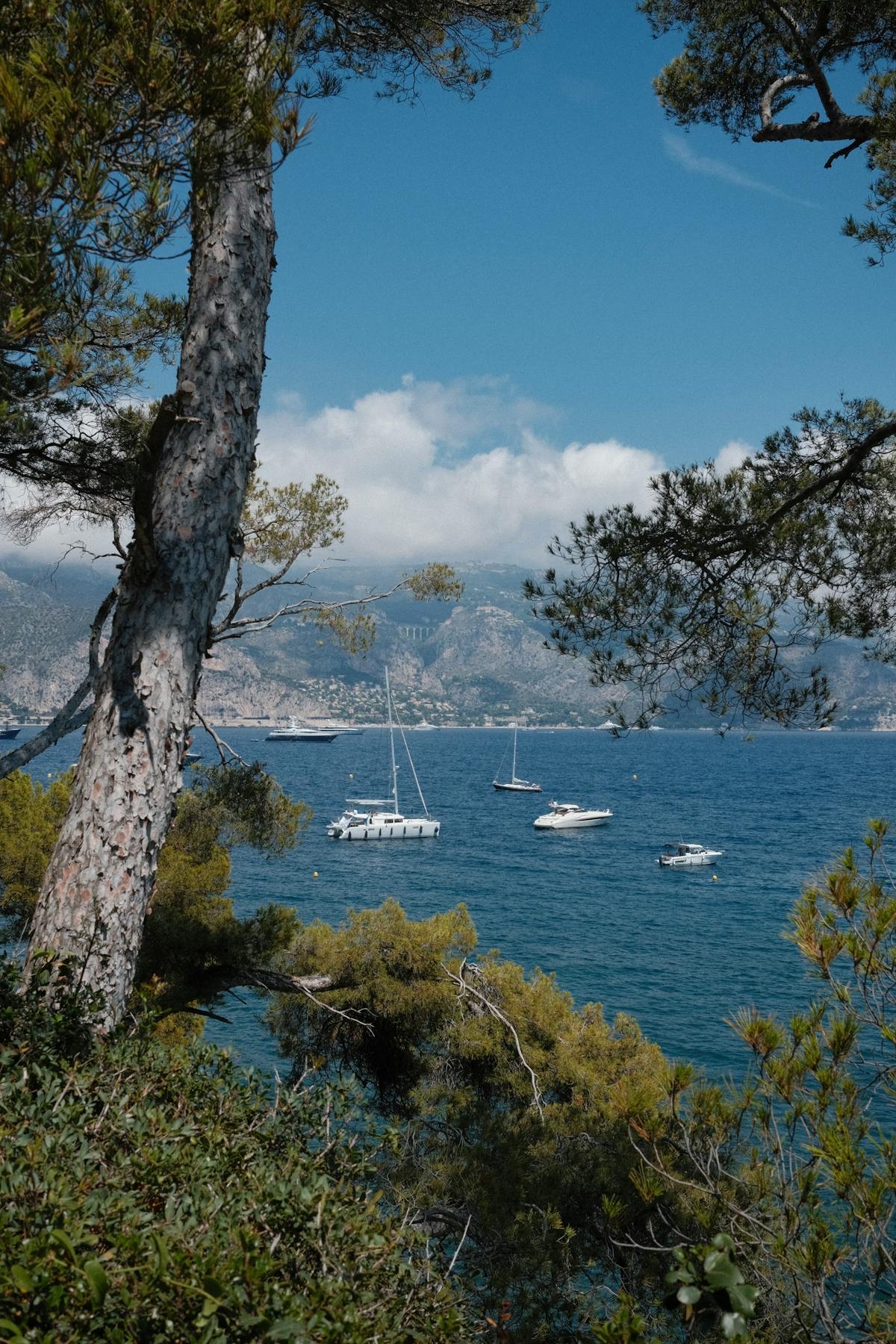
Marinas and anchorages serve different purposes. A good itinerary mixes both.
Marinas give you shore power (charge devices, run air conditioning), fresh water, showers, and easy access to town. They also cost money: 30 to 80 euros per night in Greece, 60 to 200 euros in Croatia, less in Turkey. In peak season, popular marinas (Hvar, Gaios, Fiskardo) fill up by early afternoon. Book in advance or arrive before 2pm.
Anchorages are free and often more scenic. You drop anchor in a sheltered bay, swim off the back, and cook dinner watching the sunset. The downside: no shore power, no water, and you need to be confident in your anchoring. On a crewed charter, the captain handles this.
A practical mix: 3 to 4 nights at anchor, 2 to 3 nights in a marina. That keeps costs down while giving you enough shore access for provisioning, restaurants, and exploring towns.
Step 4: Check the Weather Window
Wind direction and strength determine whether your planned itinerary works. The general rule: sail with the prevailing wind when possible, not against it.
In the Mediterranean:
- Greek Ionian: Northwest afternoon thermal breezes (light, predictable). Any direction works.
- Cyclades: Strong northerly meltemi in July-August. Plan to sail south with the wind, not north against it.
- Croatia: Northwest afternoon Maestral (light sea breeze). Generally manageable in all directions.
- Turkey: Light thermal breezes. Very sheltered, any itinerary works.
Check the forecast daily. A good charter itinerary has alternatives: "if the wind is from the north, we go here; if it is calm, we go there." Experienced skippers call this having a "Plan B bay" for every day.
Step 5: Plan Provisioning Stops
On a bareboat charter, you need to restock food and water every 2 to 3 days. Plan at least two marina stops near towns with supermarkets. Small island shops have basics (bread, water, beer) but not full provisioning.
On a crewed charter, the chef handles this. But if you have specific dietary needs or want particular drinks, communicate that through your preference sheet before the charter.
Water management: Charter yachts typically carry 200 to 400 litres of fresh water. This lasts 2 to 3 days with normal use (cooking, washing dishes, quick showers). Topping up at a marina is easy and usually included in the berth fee.
Step 6: Build Your Day-by-Day Plan
Here is a template for a 7-night charter:
| Day | Plan | Distance |
|---|---|---|
| Saturday | Board 3-5pm. Briefing. Stay at base marina. Dinner ashore. | 0nm |
| Sunday | First sail. Short passage to a nearby anchorage. Get comfortable with the boat. | 10-15nm |
| Monday | Sail to first "must-see" destination. Afternoon exploring. | 15-25nm |
| Tuesday | Short hop or lazy day. Beach, snorkelling, swimming. | 5-15nm |
| Wednesday | Longer passage to second "must-see" destination. Marina night. | 20-30nm |
| Thursday | Explore the area. Short day sail. Start heading back towards base. | 15-20nm |
| Friday | Return towards base area. Last swim, last sunset. Marina near base. | 15-25nm |
| Saturday | Motor to base marina. Disembark by 9am. | 5-10nm |
Total: 85 to 155nm for the week. That is realistic and enjoyable.
What to Avoid
Marina-hopping every night. Expensive and exhausting. You arrive, plug in, walk into town, and leave the next morning. You never experience the best part of chartering, which is anchoring in a bay by yourselves.
Copying someone else's itinerary exactly. Their wind, their crew, their interests, and their week were all different. Use other itineraries as inspiration, not a fixed plan.
Booking every marina in advance. Reserve the popular ones (2 to 3 nights), but leave the rest flexible. The best charter memories come from spontaneous stops.
Ignoring the return journey. People plan an ambitious outbound route and then realise they have 60 miles to cover in one day to get back. Always plot the return first and work outwards.
Working with a Broker or Skipper
If you are booking through a broker or have a skipper, share your itinerary ideas but listen to their local knowledge. A good skipper knows:
- Which anchorages have good holding (sand vs rock)
- Which restaurants have mooring for dinghies
- Which marinas are worth the money and which are overpriced
- Where the best swimming is at each stop
- What the weather pattern means for your specific route
The best charters happen when the client provides the "what we want to experience" and the skipper provides the "how and where."
Sample Itineraries
We have detailed itineraries for the most popular charter destinations:
- Mallorca: A Week Sailing the Island (with specific costs and stops)
- Best Greek Islands for Sailing
- Croatia: The Dalmatian Coast Guide
- Turkey: The Turquoise Coast
- Caribbean vs Mediterranean
We Plan Itineraries for You
Itinerary planning is one of the things we do best. Tell us your group size, interests, and dates. We will build a day-by-day route with marina bookings, cost estimates, and alternatives for every weather scenario.
Message us on WhatsApp or Telegram to start planning your charter itinerary.