The Real Question Parents Have
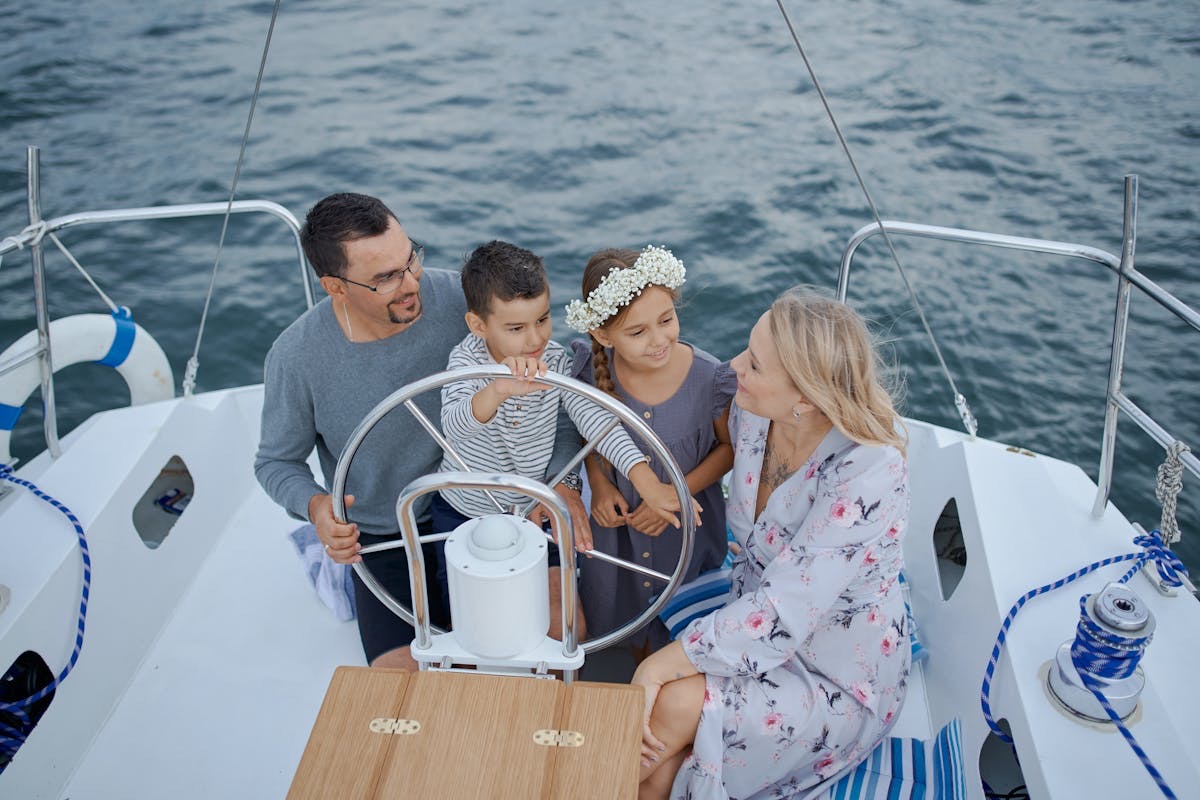
You are thinking about chartering a yacht with your children. You have seen the photos: kids jumping off the back of a catamaran into turquoise water, families eating dinner at anchor with a sunset behind them. It looks perfect. But you also have a voice in your head asking: is this actually a good idea with a three-year-old?
The honest answer: it depends on the child, the boat, and how you plan it. Family charters can be extraordinary. They can also be exhausting disasters. This guide is about telling you which one yours will be, before you spend the money.
Is There a Minimum Age?
There is no legal minimum age for children on charter yachts in European waters. Babies have sailed. But practical and safe are different things.
Under 2: Possible but hard. You need a cabin with a lee cloth or bunk board to stop them rolling out. Nappies in a marine toilet are a nightmare. The boat moves constantly, which means you are constantly watching. Most charter companies will rent to you, but some experienced skippers advise waiting.
Ages 2 to 4: This is where it starts working, but only on a catamaran (more on that below). Toddlers need safety netting around the deck, which most charter companies provide free if you ask. They will not remember the trip, but you will get some genuinely magical family time. Keep sailing days short. Two to three hours maximum between anchorages.
Ages 5 to 8: The sweet spot begins. Kids this age are old enough to swim, snorkel with supervision, and start understanding basic sailing. They find the whole thing thrilling. "We live on a boat" is the most exciting sentence a six-year-old can say.
Ages 9 and up: Brilliant. They can crew, handle the dinghy, snorkel independently, and entertain themselves. Teenagers who are initially sceptical tend to come around once they are jumping off the boat into a bay they have to themselves.
Catamaran vs Monohull for Families
This is not even close. Book a catamaran. (For the full comparison, see our catamaran vs monohull guide.)
A monohull heels (tilts) when sailing. Sometimes 15 to 20 degrees. For adults, it is part of the experience. For a four-year-old trying to eat lunch, it is miserable. Things slide off tables. Walking across the cabin means holding on. Younger children get scared.
A catamaran stays flat. It barely tilts at all, even in moderate wind. The cockpit is wide and level. The trampoline net at the front becomes the children's favourite place on the boat. There is more space everywhere: wider cabins, a bigger saloon, more deck area. The hulls create a natural paddling pool at the back steps when you are anchored.
Catamarans also have shallower drafts, which means you can anchor closer to beaches. With kids, this matters. A short dinghy ride to the beach is fine. A long one with a tired toddler is not.
The cost difference: A catamaran charter costs roughly 30 to 50% more than a comparable monohull. For a family with children under 8, it is worth every penny. A 40-foot catamaran in Greece in July runs around 4,500 to 7,000 euros per week bareboat, or 7,000 to 12,000 euros with a skipper.
Safety on Board
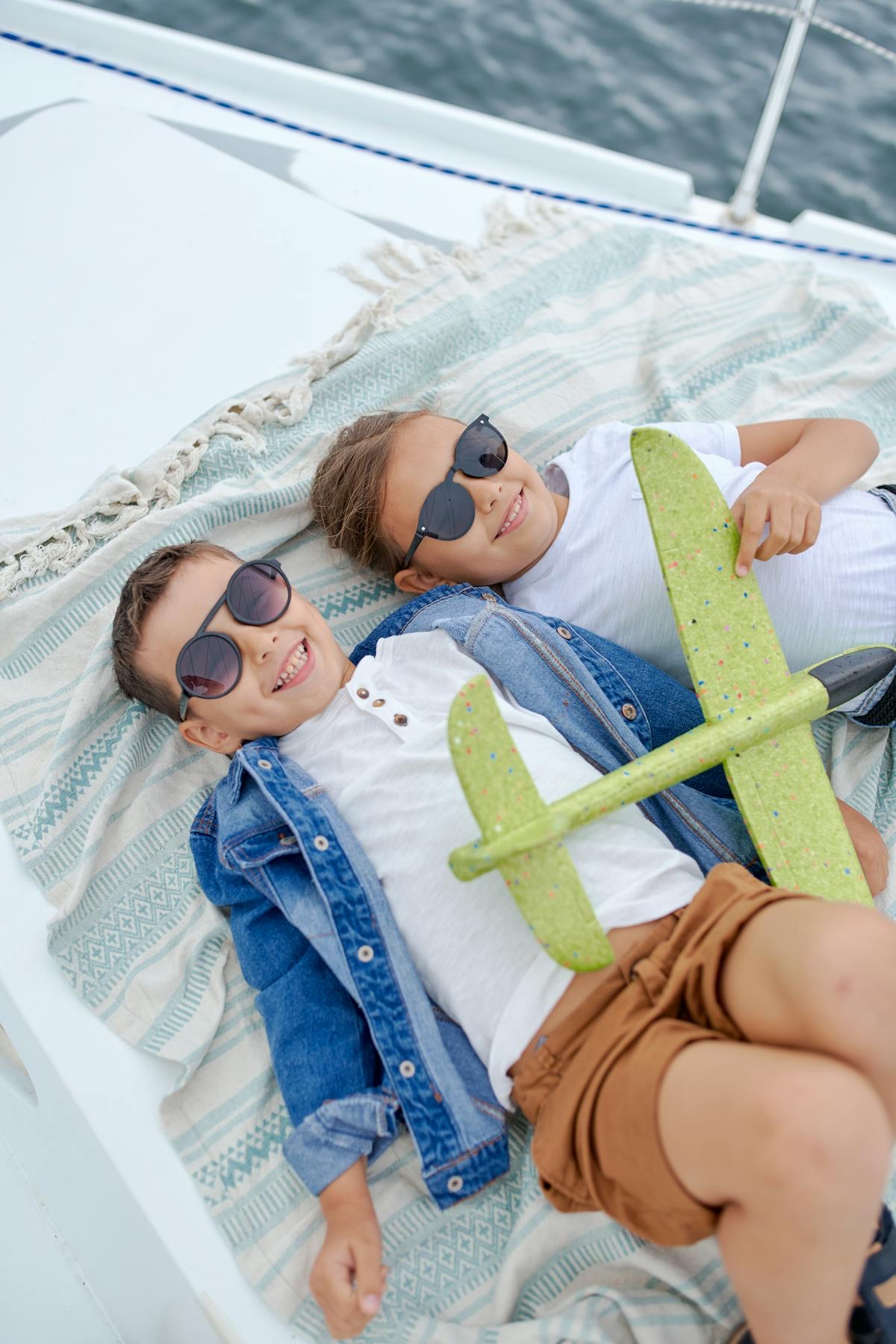
This is what keeps parents up at night before a charter. Here is what actually matters.
Safety netting. Request it when you book. It stretches between the lifelines (the wire railings around the deck) and prevents small children from slipping through the gaps. Most charter companies in Greece, Croatia, and Turkey provide it free of charge. If they charge extra, it is usually 50 to 100 euros for the week. Non-negotiable with children under 6.
Lifejackets. The charter company provides them. Specify your children's ages and weights when booking so the right sizes are on board. Children should wear lifejackets whenever they are on deck and the boat is moving. No exceptions. Automatic inflating lifejackets are available for children over 15kg.
The cockpit rule. When sailing, children stay in the cockpit (the seating area at the back where the helm is). The cockpit has high sides and is the most protected part of the boat. Going forward on deck while sailing is for adults only.
Man overboard. On a crewed charter, the skipper will brief you on what to do. On a bareboat, you must know the procedure before you leave the marina. The short version: shout, point, throw the lifebuoy, start the engine, do not jump in after them. Practice it on day one in a calm anchorage with a fender as the "person."
Swimming. At anchor, the boat is stationary and the water is usually calm. Children can swim from the back steps. A swimming platform (standard on most catamarans) makes getting in and out easy. Set clear rules: no swimming without an adult watching, no swimming near the propellers, and always use the ladder to get back on.
The biggest actual risk is not falling overboard. It is sunburn and dehydration. Children on boats get far more sun exposure than on a beach because of the reflection off the water. Factor 50 sunscreen, reapplied every two hours. Hats with neck covers. Rash vests for swimming. And twice as much water as you think they need.
Seasickness in Children
Children are more susceptible to seasickness than adults, particularly between ages 2 and 12. But here is the good news: most family sailing happens in sheltered waters with short passages, which dramatically reduces the risk. For the full breakdown of what works (medications ranked by evidence, destinations ranked by calmness), see our seasickness guide.
Prevention that works:
- Keep passages short. Two to three hours between anchorages. Most seasickness hits after 30 to 60 minutes of continuous motion. Short hops in sheltered water rarely cause problems.
- Sail in the morning. Wind and waves tend to build through the afternoon. Leave early, arrive by lunchtime, spend the afternoon at anchor.
- Dramamine for Kids (dimenhydrinate). The most commonly used motion sickness medicine for children. Dosage is weight-based (typically 1 to 1.5mg per kg). Give it 30 to 60 minutes before sailing, not after symptoms start. It causes drowsiness, which on a boat is actually helpful. Check with your GP or pharmacist before the trip.
- Ginger. Ginger biscuits, ginger sweets, or ginger tea. The evidence is mixed, but many parents swear by it and there are no side effects.
- Fresh air and horizon. Keep children on deck (in the cockpit) where they can see the horizon and feel the breeze. Below deck is where seasickness gets worse. If a child starts feeling ill, bring them up immediately.
- Acupressure wristbands (Sea-Bands). Cheap, no side effects, and some children find them helpful. Worth packing even if you are sceptical.
What does not work: Reading or screens below deck. This is the fastest way to trigger seasickness in anyone.
Test before you go. If you are worried, take your child on a short boat trip at home first. A one-hour harbour cruise or river trip will give you a reasonable idea of how they handle motion.
What a Day Actually Looks Like
New parents imagine long ocean crossings. The reality of a family charter is much gentler.
7:30am. Kids wake up. They always wake up early on boats. Breakfast in the cockpit. Cereal, fruit, toast. Coffee for you.
8:30am. Swimming off the back of the boat. The water is warmest first thing. Kids jump in, snorkel, mess around on paddleboards. You drink your second coffee.
10:00am. Pull up the anchor, motor or sail to the next bay. This is the "sailing" part. Usually 1 to 2 hours. Kids sit in the cockpit, watch the coastline, maybe help with the ropes. Younger ones often fall asleep.
12:00pm. Arrive at a new anchorage. Drop anchor. Lunch on the boat (sandwiches, salad, whatever is easy). The children do not care about the food. They care about jumping off the boat.
1:00pm. Dinghy to the beach or a village. Explore, swim, get ice cream. This is the highlight for most kids.
4:00pm. Back to the boat. Quiet time. Books, card games, naps. Adults get a break.
6:00pm. Sundowners in the cockpit. The kids play on the trampoline or swim again. This is the hour that makes the whole trip worth it.
7:30pm. Dinner. Either cook on the boat (most charter galleys are well-equipped) or take the dinghy to a taverna on shore. Waterfront tavernas in Greece are remarkably child-friendly, even at 9pm.
9:00pm. Kids in bed. They will sleep well. The gentle motion of the boat at anchor is like a cradle. Adults sit in the cockpit with a glass of wine and actual silence.
What to Pack for Kids
Pack light. Storage on a yacht is limited and you will be living in swimwear.
Essential: Swimwear (3 sets, they never dry as fast as you think). Rash vests with UV protection. Sun hats with chin straps (so they do not blow away). Factor 50 sunscreen. Waterproof sandals or reef shoes. A light fleece for evenings. Seasickness remedies. Any regular medicines.
Useful: Snorkelling gear sized for kids (charter companies sometimes have it, but child sizes are hit or miss). A waterproof phone case. A few card games or small toys for quiet time. Fishing line and hooks (kids love fishing off the back of the boat, even if they catch nothing). Glow sticks for evening entertainment.
Do not bring: Hard suitcases (there is nowhere to store them; use soft bags). Too many clothes. Anything you would be upset to lose overboard.
Crewed vs Bareboat with Kids
If you have sailing experience and children over 6, bareboat works. You know the boat, you set the pace, and you save money.
If this is your first charter or your children are under 6, book a skipper. A skipper costs 150 to 200 euros per day in the Mediterranean. For that, you get someone who handles the boat while you handle the children. You do not have to worry about anchoring, navigation, or weather decisions. You can actually relax.
A hostess/cook (additional 150 to 180 euros per day) is a genuine luxury with small children. Someone else makes meals, keeps the boat tidy, and frees you to be present with your kids instead of doing boat chores. It turns a sailing holiday into an actual holiday.
The maths: A week on a 40-foot catamaran in Greece with a skipper and cook costs roughly 9,000 to 14,000 euros total (boat, crew, fuel, provisions). Split between two families (common and recommended), that is 4,500 to 7,000 euros per family for a week. Per person, per night, it competes with a decent hotel.
Best Destinations for Families
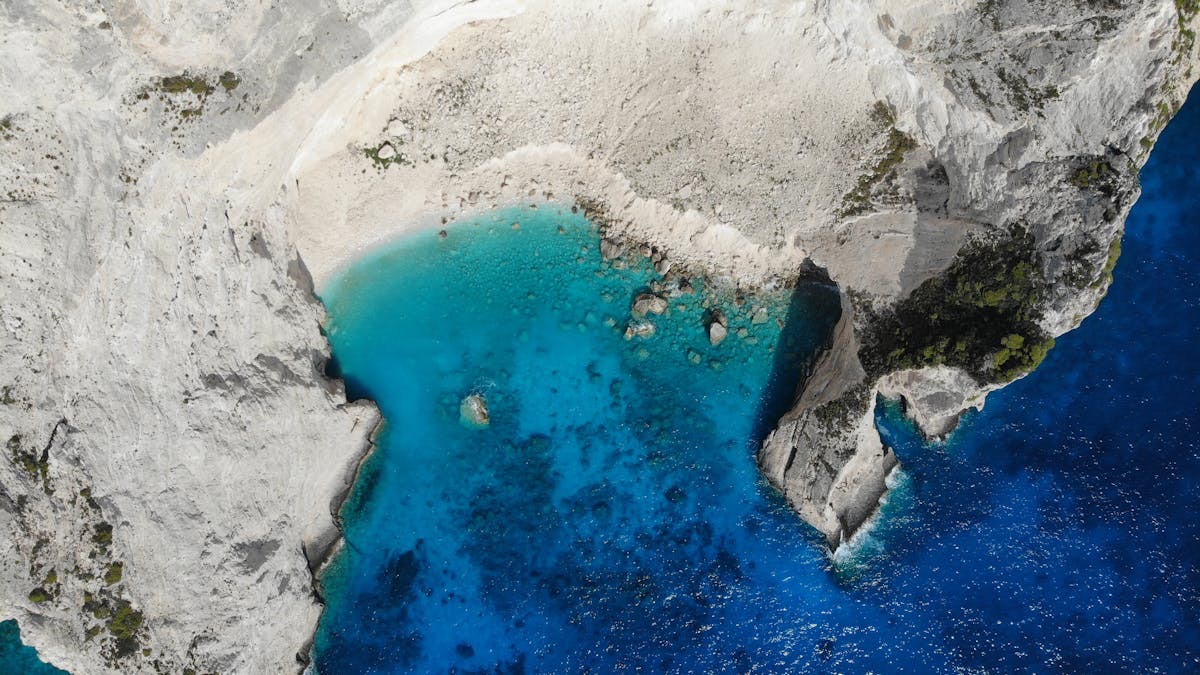
Greece (Ionian Islands). The number one choice for family sailing. The Ionian Sea (Corfu, Lefkada, Kefalonia, Ithaca, Zakynthos) is sheltered, with short distances between islands, calm water, and hundreds of protected bays. Tavernas are genuinely welcoming to children. Provisioning is easy. The sailing is gentle enough for first-timers. July and August are warm and mostly calm.
Croatia (Central Dalmatia). Split to Dubrovnik or the islands around Hvar and Korcula. Stunning scenery, clean water, good infrastructure. Slightly more wind than the Ionian, so better for families with older children or some sailing experience. Excellent ice cream.
Turkey (Southwest coast). The Turquoise Coast between Gocek and Marmaris. Incredibly sheltered, warm water, and significantly cheaper than Greece or Croatia (provisioning, eating out, and mooring fees are all lower). Fewer tourists in the anchorages. The ancient ruins at Kekova are a real adventure for older kids.
British Virgin Islands. If budget allows and you want Caribbean water. Short passages, trade wind sailing (steady and predictable), and the Baths at Virgin Gorda are a natural playground. More expensive than the Med but the water temperature and clarity are hard to beat.
Avoid for families: Open Atlantic crossings (obviously). The Cyclades in Greece during meltemi season (July and August bring strong, unpredictable winds). Any itinerary with daily passages over 4 hours.
When NOT to Charter with Kids
Honesty matters here. Do not book a family charter if:
- Your children get severely carsick. Seasickness and carsickness share the same mechanism. If your child vomits on every car journey over 30 minutes, a yacht is a significant risk even with medication.
- Your child cannot swim and is afraid of water. They will spend a week surrounded by it with no escape. That is stressful for everyone.
- You want a break from parenting. A yacht is a confined space. There is no kids' club, no babysitter (unless you hire a nanny as crew), and nowhere for children to go that is out of sight. If you need adult-only downtime, a resort with childcare is a better choice.
- Your family needs predictability. Weather changes plans. The anchorage might be too exposed, so you go somewhere else. The taverna might be closed. Sailing requires flexibility, and some families (and some children) do not enjoy that.
If any of these apply, wait a few years or choose a different type of holiday. There is no shame in it. A bad family charter is expensive and memorable for the wrong reasons.
We Help Families Get This Right
Matching a family to the right boat, crew, destination, and week is what we do. We will tell you honestly whether your kids are the right age for this, suggest itineraries that actually work with children, and find a charter company that provides safety netting, child lifejackets, and a skipper who is used to sailing with families.
Message us on WhatsApp or Telegram and we will plan your family charter.