Why Greece
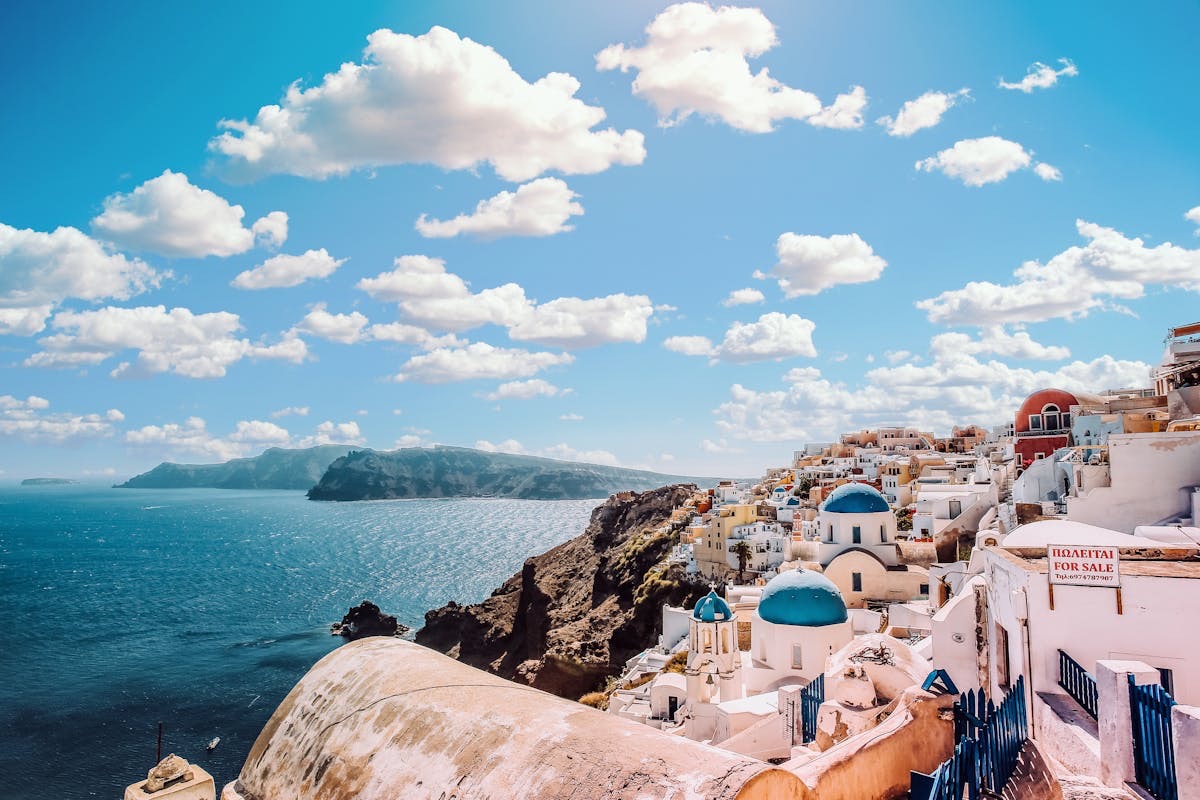
Greece has roughly 6,000 islands, of which about 230 are inhabited. The sailing season runs from May to October, the water is warm enough to swim in from June, and charter prices are 20 to 30 percent lower than Croatia for comparable boats.
If you are looking for the best Greek islands for sailing, the answer depends on your experience level, when you are going, and what kind of holiday you want. Greece has four main sailing regions, and they are genuinely different from each other.
The Ionian Islands
Best for: First-time charterers, families, calm conditions.
The Ionian islands sit on the western side of Greece, sheltered from the meltemi wind that dominates the Aegean in summer. Winds are typically 8 to 15 knots, seas are gentle, and the distances between islands are short. This is where most charter companies recommend beginners start, and the best choice for families with children.
Corfu is the northernmost island and the most cosmopolitan. Venetian architecture in the old town, good restaurants, and easy flights from most European cities. It works well as a starting point for a one-way charter south.
Lefkada is connected to the mainland by a bridge, which makes it the easiest charter base to reach by car. The sailing south from Lefkada through Meganisi, Ithaca, and Kefalonia is some of the most beautiful in the Mediterranean. Nydri on Lefkada is one of the busiest charter bases in Greece.
Kefalonia has dramatic scenery, quieter anchorages, and Myrtos Beach, which regularly appears on "best beaches in Europe" lists. The island feels less touristy than Corfu or Zakynthos.
Zakynthos is known for Navagio (Shipwreck) Beach and the blue caves on the north coast. Worth a day stop, though the island itself is more package-holiday than the others.
A typical one-week Ionian charter covers four to six islands with daily sails of 15 to 25 nautical miles. Comfortable, unhurried, and manageable even in lighter winds.
Cost: Bareboat catamarans in the Ionian run €3,000 to €5,500 per week in shoulder season. Monohulls start from €1,500.
The Cyclades
Best for: Experienced sailors, iconic scenery, nightlife.
The Cyclades are what most people picture when they think of Greece. White villages on hilltops, blue-domed churches, sunsets over the caldera. Santorini, Mykonos, Paros, Naxos, Milos, and dozens of smaller islands scattered across the central Aegean.
The sailing here is more demanding. The meltemi wind blows from the north through the Cyclades from mid-June to September, regularly hitting 20 to 30 knots and occasionally more. Seas can build to two metres in the open channels between islands. This is not dangerous for experienced sailors, but it is not relaxing either. If you are prone to seasickness, the Cyclades in July and August are best avoided.
Paros is the best base for exploring the Cyclades. Central location, good marina, and easy reach to Naxos, Antiparos, and the Small Cyclades.
Naxos is the largest of the Cyclades and the most self-sufficient. Great food, long beaches, and a mountainous interior. Less crowded than Paros.
Milos has volcanic coastline, dozens of colourful beaches, and the kind of swimming spots that make you wonder why you ever booked a hotel with a pool.
Santorini is worth a visit by boat, but anchoring is difficult and the caldera anchorage is deep (20 to 30 metres). Most charterers visit for a day and move on.
Mykonos has the nightlife and the restaurants. Marina berths are expensive (€100+ per night in season) and fill up fast.
Cost: Cyclades charters are 10 to 20 percent more expensive than the Ionian. Expect €3,500 to €6,500 for a bareboat catamaran in shoulder season. Crewed charters start around €10,000.
The Saronic Gulf
Best for: Short charters, weekend trips, easy access from Athens.
The Saronic Gulf is the body of water between Athens and the Peloponnese. The islands are close together, close to Athens, and the sailing is sheltered. If you only have three to five days, this is where to go.
Aegina is an hour from Athens by fast ferry. Pistachio groves, a well-preserved ancient temple, and good tavernas. A solid first stop.
Poros is a tiny island with a narrow channel between it and the Peloponnese mainland. The town waterfront is lovely, and the channel provides a perfectly sheltered anchorage.
Hydra is the highlight. No cars, no motorbikes. Donkeys carry goods up the stone steps. The harbour is one of the most photographed in Greece. Restaurants are good but pricey by Greek standards.
Spetses is the southern end of the Saronic, with a more relaxed atmosphere than Hydra and good swimming beaches around the coast.
The Saronic is the cheapest region to charter in Greece. Bareboat monohulls start from €1,200 per week. It is also the most convenient. You can fly into Athens, take a taxi to Alimos marina, and be sailing within two hours of landing.
The Dodecanese and Sporades
Best for: Avoiding crowds, longer itineraries, mixing cultures.
The Dodecanese (Rhodes, Kos, Symi, Patmos, Leros) sit in the southeastern Aegean, close to the Turkish coast. The islands have a distinct character. Italian colonial architecture from the early 20th century, Ottoman influences, and a slower pace than the Cyclades. Symi's colourful harbour is one of the most striking sights in Greece.
The wind in the Dodecanese is less consistent than the Cyclades, which can be a positive or negative depending on your perspective. Sailing distances between islands are moderate.
The Sporades (Skiathos, Skopelos, Alonnisos) are northeast of Athens, lush and green compared to the dry Cyclades. Skopelos was the filming location for Mamma Mia, which tells you something about the scenery. The marine park around Alonnisos is excellent for snorkelling and spotting Mediterranean monk seals.
Both regions are significantly less crowded than the Cyclades or Ionian. If you have been to Greece before and want something different, these are worth considering.
When to Go
May: Season opens. Water is cool (18 to 20°C) but swimmable. Winds are light. Prices are at their lowest. Charter bases are fully operational by mid-May.
June: Excellent. Water warms up (22 to 24°C), meltemi has not yet started in earnest, and prices are still shoulder season. Our top recommendation for most people.
July and August: Peak season. Meltemi blows hard in the Cyclades and eastern Aegean. The Ionian stays calmer. Prices peak. Book by January for the best boats.
September: Water is warmest (25 to 26°C), meltemi fades, tourists thin out, and prices drop. Arguably the best month for sailing in Greece, especially the Cyclades. Late September can bring the first autumn storms, but they are rare and well-forecast.
October: Season winds down. Still warm enough for swimming in the first half. Some charter companies offer significant discounts. A few bases close by mid-October.
What It Costs
Greece remains one of the best-value yacht charter destinations in the Mediterranean. Here are 2026 prices for a one-week charter:
Bareboat monohull (36-42 feet): €1,500 to €4,000 depending on region and season.
Bareboat catamaran (40-45 feet): €3,000 to €6,500. Catamarans are popular in Greece and get booked early.
Crewed charter (captain and chef): €8,000 to €20,000 for a mid-range yacht.
Add roughly 25 to 30 percent on top for running costs (fuel, marina fees, provisioning, end cleaning). Marina fees in Greece are among the lowest in the Med. Many anchorages are free. For a full breakdown, see our yacht charter cost guide.
Let Us Find Your Route
Greece has more options than any other sailing destination, which is exactly what makes it overwhelming to plan. Tell us when you want to go, how many are in your group, and what matters most to you. We will match you with the right region, the right boat, and the right route.
Message us on WhatsApp or Telegram to get started.