What a Flotilla Sailing Holiday Is
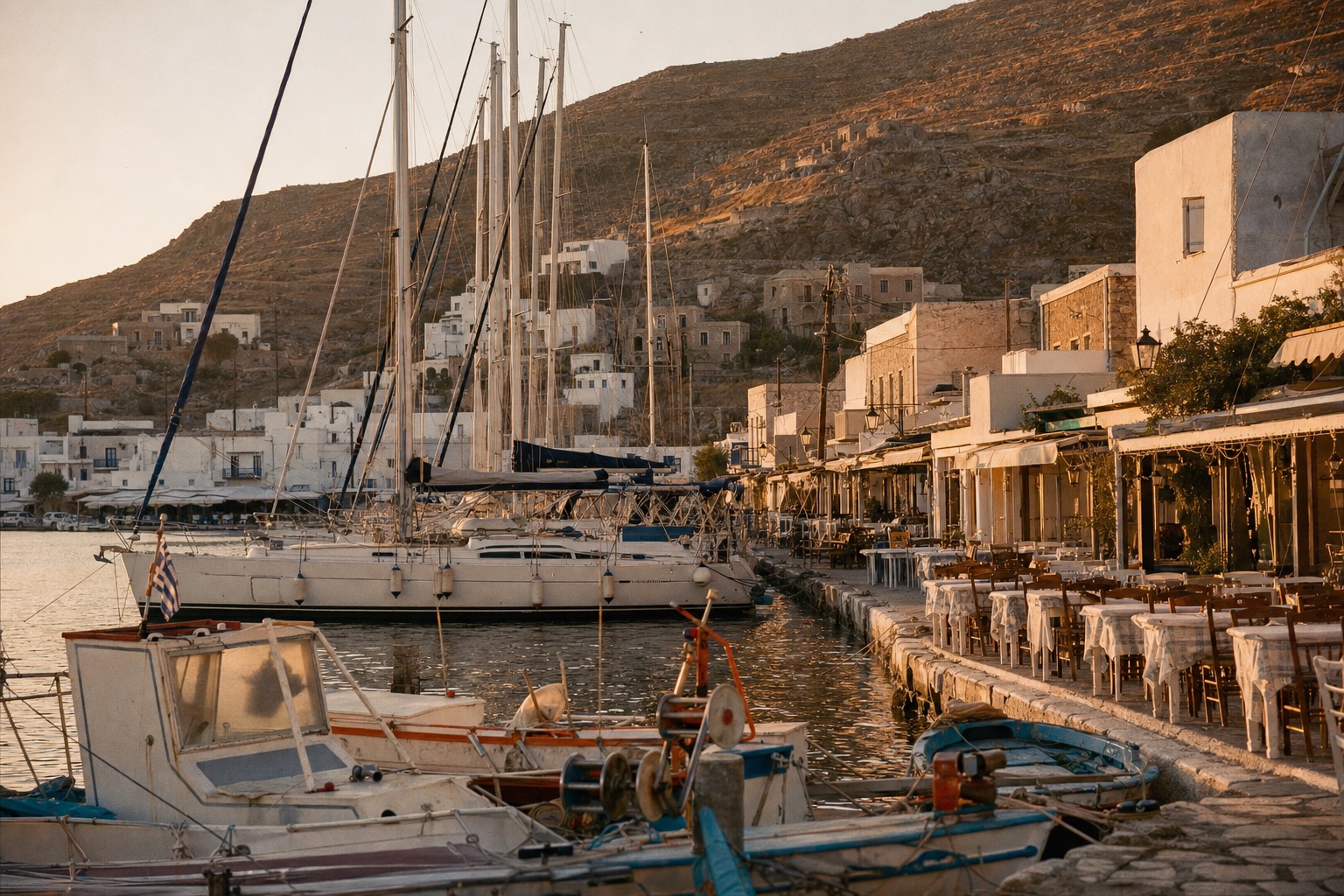
A flotilla is a convoy of private yachts following a lead boat. Somebody else plans the route, reads tomorrow's forecast tonight, books the good berths, and arrives first to take your lines as you reverse into a tight Greek harbour. You still sail your own boat, make your own mistakes in open water, and eat dinner wherever you like. The difference between this and bareboat charter is that the mistakes stay cheap and the berths stay available.
For a certain kind of sailor, usually one with a fresh licence and a sceptical spouse, it is the best entry into Mediterranean sailing there is.
How the Week Actually Runs
Boarding happens late afternoon, typically around six, followed by a welcome briefing and often a group dinner ashore. From Monday, the rhythm settles:
Morning: the lead skipper briefs everyone on today's leg, wind expectations, hazards, and what to see at the destination. Boats leave whenever they like.
The day's sail: usually 10-20 nautical miles of line-of-sight navigation. Swim stops happen mid-route. You will see the lead boat's dinghy appear if anyone radios trouble.
Arrival: the lead crew reaches the harbour ahead of you and directs mooring. In Greece this means Mediterranean-style stern-to parking, the manoeuvre new skippers fear most, done with an expert shouting friendly instructions.
Evening: optional group events. Beach BBQs, taverna dinners, or nothing at all. Nobody checks attendance.
A lead crew normally numbers three: skipper, host, engineer. Family flotillas add someone whose entire job is occupying children, which experienced parents will recognise as the real luxury.
What It Costs
The flotilla premium over bareboat is modest. Sail Ionian charges £350 per boat per week for their informal flotilla on top of the bareboat rate; larger operators bundle differently but land in similar territory. Sunsail's packaged weeks start around £1,869 for two people, yacht included.
Then apply the standard rule we use across all charters: add 25 to 50 percent for the stuff nobody includes. Fuel, provisions, mooring fees (paid nightly), tourist taxes, damage waivers, transfers, flights. A realistic couple-on-a-36-footer figure lands near £3,000 all-in for a week; a family of five on a four-cabin boat nearer £6,000-7,000 in peak season. Our charter cost guide breaks these layers down properly.
One thing you do not pay for: other people. Your yacht carries only your party plus any hired skipper. The social side happens ashore, voluntarily.
A Day, In Numbers
To make it concrete, here is a mid-week day on an Ionian flotilla, clock times included:
- 07:30 Bakery run ashore; gulls inspect proceedings.
- 09:00 Lead skipper's brief: 14nm to today's harbour, force 3-4 from the northwest after noon, one shallow patch marked on the chart handout.
- 10:00 Lines off. Sails up within twenty minutes as the thermal fills in.
- 12:30 Anchored in a bay for lunch and swimming; three other flotilla boats raft their dinghies together like a floating picnic.
- 14:30 Off to the destination harbour, mainsail only, gentle reaching.
- 16:00 Arrival queue begins; lead crew takes lines stern-to at the town quay. Mooring fee tonight: about €15 plus €8 harbour tax.
- 19:30 Optional taverna dinner: twelve boats, sixty sailors, one long table that did not exist at 18:00.
- 22:00 Deck lights out; somebody's crew member checks the bow line twice because they always do.
That is the whole product. No regimented sailing, no shared cabins, just a week where the hard parts have staff.
The Licence Question Has Changed
Worth flagging because older articles get this wrong: Greek port authorities tightened requirements recently. They now want an ICC (International Certificate of Competence), ASA's IPC, or a higher practical certificate such as RYA Coastal or Yachtmaster. An RYA Day Skipper certificate alone no longer satisfies them. If yours predates photo-ID standards and is over twelve years old, apply for an ICC before you fly; the RYA issues them for about fifty pounds to members.
Croatia adds a second requirement: somebody aboard needs a VHF radio licence alongside the skipper qualification. Neither rule is difficult to satisfy. Both are awkward to discover at the marina office on Saturday afternoon.
No qualifications at all? Hire a skipper for the week through the same operator, or read our guide to chartering without a licence.
Where To Do Your First One
The Ionian Islands, Greece. The classic answer and still correct. Light afternoon winds, short hops, sheltered water, harbours every few miles. Lefkas or Corfu bases.
Dalmatian coast, Croatia. Line-of-sight island hopping from Split area bases, slightly stronger summer winds, more historic towns per mile than anywhere else. Marina fees run higher than Greece.
The Saronic Gulf, Greece. Athens base, so shorter transfers, and Poros-Hydra-Aegina makes an easy cultural loop.
Skip the Cyclades for a first flotilla. The meltemi wind that makes those islands famous also makes them a Level 3 sailing ground, and August gusts off Naxos are a poor classroom.
Choosing Between Operators
The big names run different machines, and the differences matter less in marketing than in marinas.
Sunsail and The Moorings (same parent company) offer the most standardised product: new-ish fleets, professional lead crews of three or four, themed flotillas (food-and-wine weeks in Croatia and Italy, family weeks with activities coordinators in Greece), and learn-to-sail courses run alongside the convoy. Expect corporate polish and prices to match. Their Greek and Croatian bases open April through October.
Local independents such as Sail Ionian or Greek Sails charge less for a looser product, often called informal flotilla: route advice each morning rather than rigid itineraries, help on the radio rather than a RIB shadowing you all day. Boats skew older but well maintained. Experienced sailors tend to prefer this style; nervous first-timers usually get better value from the big operators' structure than from the savings.
Whichever you pick, ask three questions before paying: how many boats sail per flotilla (six is sociable, twelve is a car park), what the lead crew's response time is overnight, and whether mooring fees are pre-paid or local extras. Operators answer these happily; the good ones answer them before you ask.
Five Mistakes First Flotillas Make
Learn them cheaply here:
- Over-provisioning. Buying a week of food on day one when every island has a bakery and a greengrocer by eight each morning. Buy two days at a time.
- Racing the fleet. Somebody always sails the legs as a regatta. Do not be that boat; the prize is arriving second at a crowded quay.
- Skipping the daily brief. Ten minutes of weather and harbour notes saves the afternoon you would spend anchored outside a full marina wondering why nobody told you about the regatta next door.
- Packing hard suitcases. Every flotilla veteran says it; every first-timer ignores it. Soft duffels stow into quarter berths, wheelie cases do not.
- Booking flights against the changeover clock. Boats hand over Saturday afternoon and must return Friday evening. A 06:40 Saturday departure sounds clever until the delayed flight strands your charter deposit.
When To Skip It
Some honesty, since operators will not say this themselves. If your group contains an experienced coastal skipper who wants solitude, a flotilla's scheduled sociability will grate by day three; book bareboat instead. If nobody aboard holds a licence and none of you want one, a skippered private charter delivers the same safety without the convoy, at similar cost once you price the flotilla premium plus your skipper anyway. And if your dates fall outside school holidays, consider that flotillas skew social for a reason: they are full of families in July.
Everyone else, particularly recent Day Skipper graduates and mixed-confidence crews, gets exactly the right amount of help.
How We Book It
Sulu arranges flotilla places alongside our regular charter work: matching the route and operator to your crew's actual confidence level, checking which weeks have spaces, and handling flights and transfers around fixed Saturday changeovers. Message us on WhatsApp or Telegram with your crew size and experience, honest answers preferred.
Related reading: first-time charter checklist, and the Greek islands compared.