Shetland has one airport that matters for a crew change, and it is not where the work is. Sumburgh sits at the southern tip of the Mainland. The grid projects, the gas plant, the Sullom Voe Terminal and the spaceport are one to three hours north by road, and in Unst's case two ferries away.
This guide covers what a charter flight to Sumburgh involves, what is generating the demand, and how crew travel to Shetland actually works once you leave the runway. Status notes are as of 17 October 2026, and anything we could not verify is flagged.
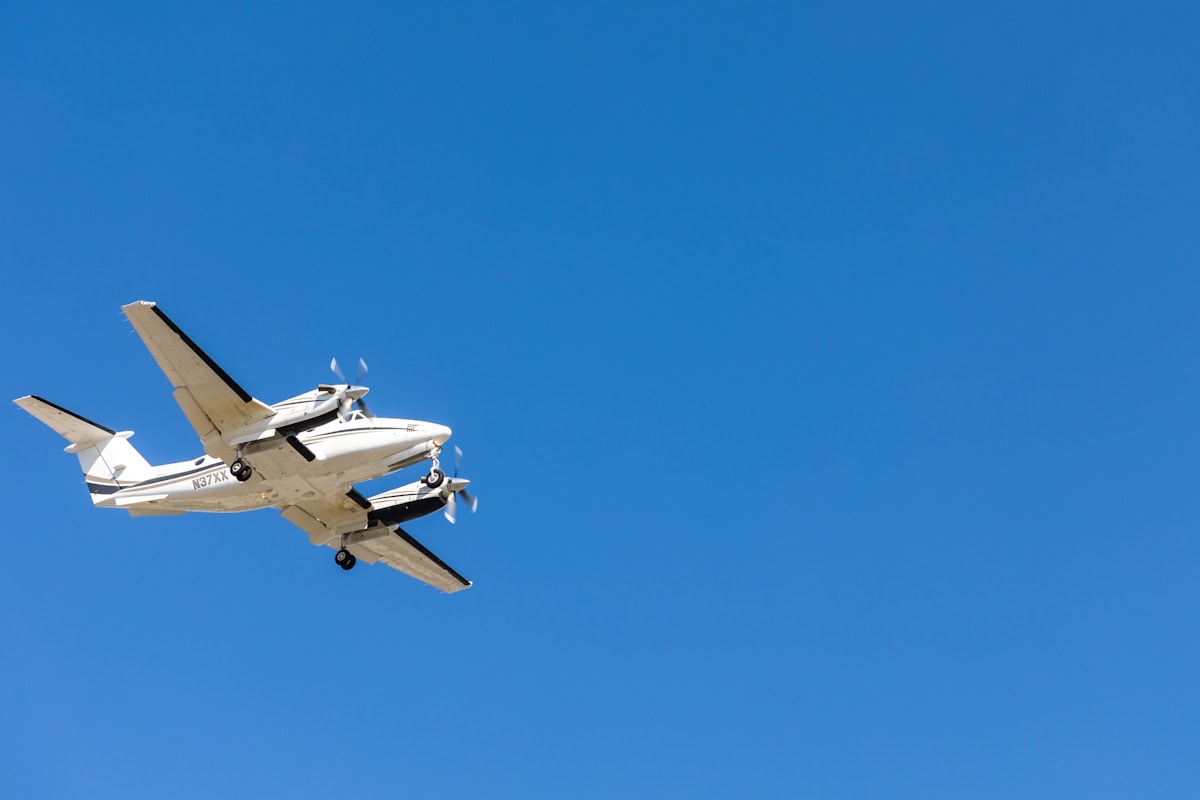
What can a charter flight use at Sumburgh Airport?
Sumburgh (EGPB) is run by Highlands and Islands Airports Limited and has two paved runways: 09/27 at 1,498 metres and 15/33 at 1,424 metres, plus a separate helicopter runway, per Wikipedia's airport entry. That is plenty for a King Air, a PC-12, a Twin Otter or an Islander. Runway length is not the constraint here. Weather, hours and slots are.
What to confirm before you promise anyone a seat:
- Prior permission. Pilot-contributed listings on airfield.directory say prior permission is required and give a notification address at the airport. Treat that as a pointer and ring the airport on 01950 461000 (number from HIAL's contact page).
- Opening hours. They vary by day and season and are shorter at weekends. The same directory lists weekday hours of roughly 07:30 to 20:00 UTC in winter and 06:30 to 19:00 in summer, with operation outside those hours on request. Other aggregators disagree, and we found no official UK AIP entry we could open, so check the AIP and current NOTAMs.
- Fuel and handling. Avgas is listed by Air BP truck and Jet A1 appears in aggregator listings, but no source we found gave quantities, a handling agent or the fire category. Ask the operator who will meet the aircraft and what fuel is confirmed.
- Customs. Listed as on request, which matters if a crew is arriving from outside the UK.
- Fees. The directory quotes £51.77 as a sample landing charge for a Cessna 172. Heavier types cost more. Ask for current charges.
Sumburgh is also busy. HIAL's own page for 16 October shows flights to Aberdeen, Edinburgh, Glasgow, Inverness and Kirkwall alongside offshore flights to named platforms and vessels. Helicopter operators for search and rescue and crew change work are based there as well. Ask the operator about arrival slots, because a charter shares the airfield with scheduled and offshore traffic.
One quirk noted in airfield listings: access is controlled by a level crossing, with barriers lowered when aircraft take off or land. It rarely troubles a crew, but it adds a few minutes of uncertainty to the first road leg.
Scatsta is closed, and Tingwall is not a gateway
Scatsta, the airfield beside the Sullom Voe Terminal, closed on 30 June 2020. It had a 1,360 metre runway and carried the oil and gas shuttle from Aberdeen. Wikipedia's Scatsta entry records the closure date. The reason was a lost contract: the offshore flying moved to a Babcock and Loganair arrangement out of Sumburgh, which began on 1 July 2020.
For a crew coordinator the consequence is simple. Before 2020 a charter could put people almost at the terminal fence. Now every fixed-wing route into Shetland lands at Sumburgh, about 50 miles from Sullom Voe by road. Rome2Rio puts that drive at roughly 1 hour 15 minutes, and it is a single estimate, so test it yourself.
Tingwall, a few miles from Lerwick, is the other airfield people ask about. It is the base for the council's inter-island air service, flown by Islanders to places such as Fair Isle and Foula. Its main runway is 805 metres long, and in spring 2025 a £1.3 million resurfacing moved the island flights to Sumburgh for a month. It is an inter-island hub, not a mainland gateway. Whether a charter from Aberdeen can use it is a question for the operator, not an assumption to build a rota on. If the job is on Fair Isle or Foula, it matters. If the job is on the Mainland, Yell or Unst, it does not.
What is driving crew travel to Shetland?
Four things, at very different stages. Name the one you are working on, because each has its own timing and its own beds.
Viking wind farm. Construction is over. Viking Energy says the 103-turbine, 443 MW site became fully operational in September 2024. What remains is operations and maintenance, which means small specialist teams rather than a camp. We found no published figure for that workforce. Anyone searching for Viking wind farm crew transport today is mostly moving service engineers and visiting contractors.
Grid. The first Shetland HVDC link to the mainland is operating. On the island, SSEN finished construction of the 22 km Kergord to Gremista link in April 2026, but it will not be energised until a battery system in Lerwick is complete, expected later in 2026. The next wave is larger. Shetland Islands Council's development director has said SSEN may need about 1,500 workers for three to five years from 2028, covering substations and a substation on Yell for wind farm connections. A second subsea cable is at an early stage, with a hoped-for 2035 energisation and three possible North Mainland landfalls (Brae, Sullom Voe, Mossbank). Our companion piece on Highland grid projects covers the wider picture.
Oil and gas. Sullom Voe Terminal (operated by EnQuest) and the Shetland Gas Plant still draw contractors, and offshore crews fly out of Sumburgh. The Sella Ness camp near the terminal has 426 rooms, and about 300 oil and gas workers were staying there when the owner applied to extend its permission. Councillors approved a ten-year extension in early 2025. The applicant's own forecast, which is a forecast and not a guarantee, was demand for around 160 rooms from the terminal and 40 from the gas plant.
SaxaVord Spaceport, Unst. This one is unsettled. In July 2026 the spaceport's managing director said it was ready for a first launch by Rocket Factory Augsburg in August or early September, with launch attempts on Mondays, Wednesdays and Fridays between 4pm and 8pm. We could not confirm that the launch has happened. The same article says nothing on workforce. Treat Unst as a site with intermittent, schedule-driven visitor demand rather than a steady rotation.
How far is the site from Sumburgh, and where do crews sleep?
Far enough that the flight is the short part. Sumburgh to Lerwick is about 25 miles, with a seven-day bus link (service 6), per Wikipedia. Sumburgh to Sullom Voe is about 50 miles by road. Beyond that, the distances below are our own rough estimates from the road map, so confirm with a route planner.
Unst is the long one. From the Mainland you cross by ferry from Toft to Ulsta on Yell, which the council guides put at 20 minutes, then drive 18 miles across Yell (allow 25 minutes), then take a second 10 minute crossing from Gutcher to Belmont. Add waiting time at each terminal. The council publishes Yell, Unst and Fetlar timetables that changed on 5 October 2026, and the first Toft sailings are early. Realistically, a crew leaving Sumburgh should treat Unst as a half-day move.
On beds, Shetland has no slack. A council-commissioned study reported in November 2025 estimated up to 1,850 temporary jobs at the peak of energy construction, and more than half of local employers had a job offer declined in the past year, often because of housing. SSEN is considering an underused hotel, a camp and serviced accommodation, as well as barges. It has told the council it wants workers within about 40 minutes of site. Lerwick is within reach for some jobs and not for others. A full 2027 or 2028 programme will compete with tourism and Sella Ness occupancy, so block-book early and do not assume spare rooms.
How reliable are the flights and the ferry?
Both fail, for different reasons, which is the argument for holding one of each. Sumburgh is exposed to low cloud and sea fog. Our disruption playbook for crews records a day in October 2017 when fog cancelled the rest of the Shetland flying, and a July 2013 episode that disrupted flights for about a fortnight. So it is not only a summer problem. The airport has approaches for several runway ends, per aggregator listings (an ILS on runway 27, for instance), which helps but does not beat cloud on the deck.
Loganair is the scheduled operator. Per Wikipedia, Sumburgh routes include Aberdeen, Edinburgh, Glasgow, Inverness and Kirkwall, plus some seasonal services. The Inverness frequency was cut in July 2026 and a return to higher frequency from 26 October depends on funding, so check the live timetable. The Aberdeen link is the busiest, and in 2020 the oil and gas flying was backed by dedicated ATR 42 aircraft, which says something about how many offshore seats it absorbs.
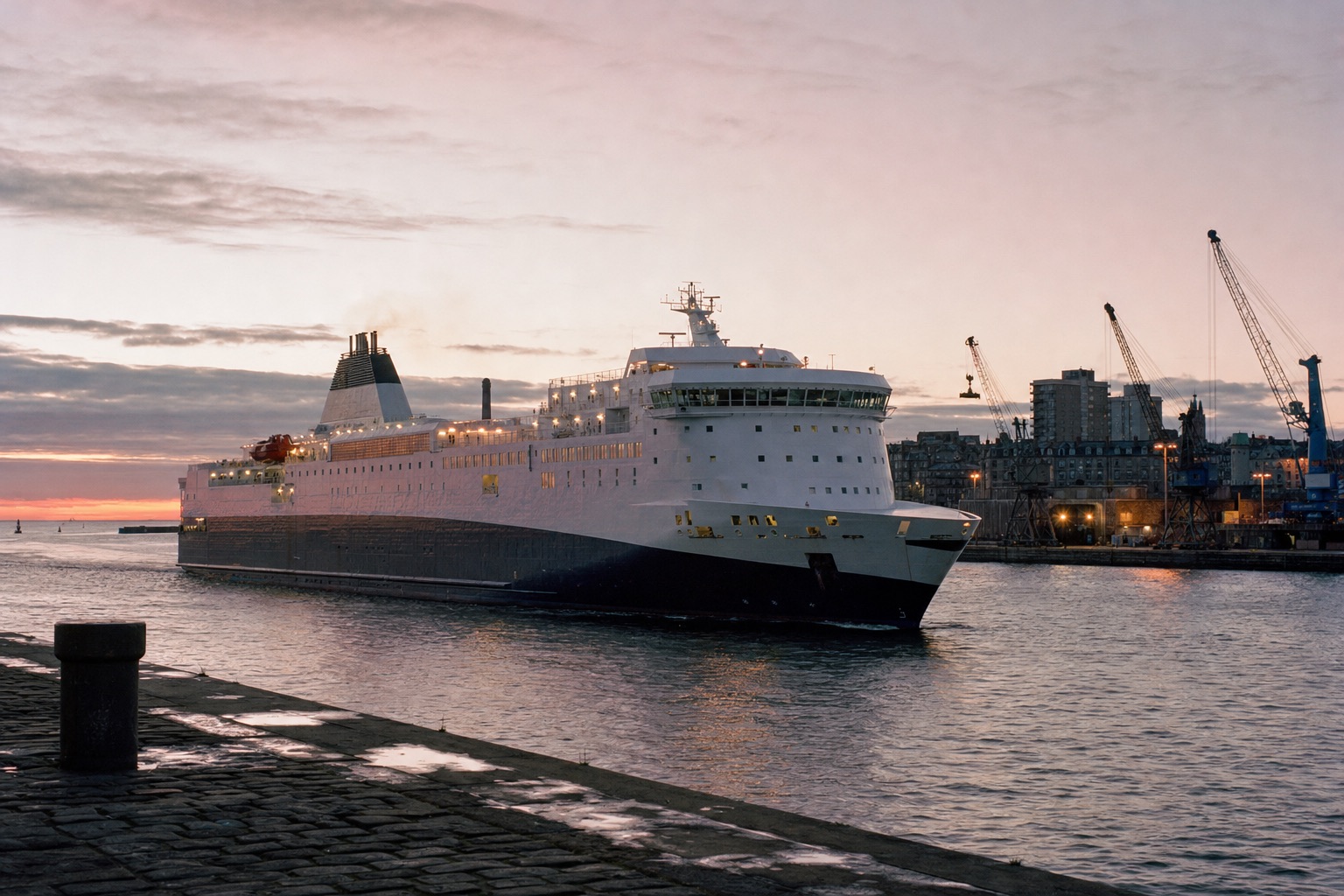
NorthLink runs the overnight Aberdeen to Lerwick service, with some sailings calling at Kirkwall. It is a proper alternative for people with vehicles and kit, but it is weather-sensitive. In January 2026 services were cancelled and the Hrossey was due to leave Aberdeen two hours early ahead of a forecast. In late March, a Friday night sailing was lost and the weekend put under review. Published timetables show an evening departure and an early morning arrival, but we could not open the current NorthLink timetable, so check it. Cabins and freight space sell out, and a ferry crossing that runs late can eat the first working morning.
Two practical rules follow. Never plan a same-day connection off a Shetland ferry or flight into a flight home. And if the aircraft cannot land, work out where it diverts. We calculate Kirkwall at about 75 nautical miles from Sumburgh, which is a short hop for a turboprop but a long way from your hotel.
Rotation options compared
Costs are indicative market reasoning, not quotes. The charter sum below uses the UK turboprop rate of about £2,150 per flight hour quoted in our aircraft comparison, and our own estimate that Aberdeen to Sumburgh is about 165 nautical miles. The block times are rough.
| Option | Journey to Sumburgh or Lerwick | Capacity | Main weakness | Indicative cost |
|---|---|---|---|---|
| Loganair scheduled, Aberdeen to Sumburgh | Around an hour in the air | Seats as sold, baggage allowance applies | Fog, offshore demand for seats, cut frequencies | Published fares; check for group handling |
| NorthLink Aberdeen to Lerwick | Overnight crossing | Cabins and vehicle decks | Gales, retimings, cabin sell-outs | Published fares; vehicles extra |
| Charter PC-12 or King Air | About 50 minutes | 6 to 9 seats, weight-limited | Same fog as the scheduled flight, airport hours | From about £4,300 for a two-hour round trip, plus positioning, landing and handling |
| Charter Twin Otter | About 1 hour 5 minutes | Up to 19 seats, fewer with kit | Few aircraft in the UK, limited availability | UK rates scarce; ask operators |
| Charter Islander | About 1 hour 20 minutes | 5 to 6 people with kit | Slow, small payload | About £1,700 to £2,000 per hour, our working UK estimate |
| Fly in, drive north | Add 1 to 1.5 hours by road from Sumburgh | Limited by vehicles | Road time, no overnight slack | Vehicle or coach hire on top |
Take an aircraft based at Aberdeen that carries eight people out to Sumburgh and a different eight back. Two flight hours at £2,150 is £4,300, or roughly £270 per passenger trip on the flying alone. That figure is illustrative. It changes with positioning, landing fees and whether the aircraft waits. A charter does not remove the fog risk, since it lands at the same airport, but it does let you move the departure time, the airport pair and the aircraft type. For help on the aircraft side, see our guide to crew charter aircraft. For the cost side, see small aircraft charter costs in the UK.
Over open sea, operators set their own policies on single-engine flying and on night operations, so ask before assuming a type. A helicopter can skip the road entirely, but it needs an approved landing site and the landowner's agreement, and it is a different conversation from an airport charter.
What Sulu does for Shetland rotations
Shetland rotations come down to small decisions made early. Which aircraft, which slot, which hotel, which ferry, and who decides when fog or a gale means switching. That is the work we do for crew travel and for business clients.
We use the best intelligence available to narrow the field fast, then people who pick up the phone to Sumburgh, the operators and the hotels. Send the headcount, the weights, the site and the dates, and we will take it from there.