A corporate yacht charter is a normal booking. Brokers in Palma, Split and Antibes do it every week from May to September. The difficulty is that the questions a UK firm needs answered (how many people, what it costs per head, what HMRC will say) sit on three different websites, and the ones ranking on Google are mostly American broker pages that cover none of them.
This guide puts them in one place. If you set budgets between October and January, it is also the right time to read it: the good yachts for June and September are booked by early spring.
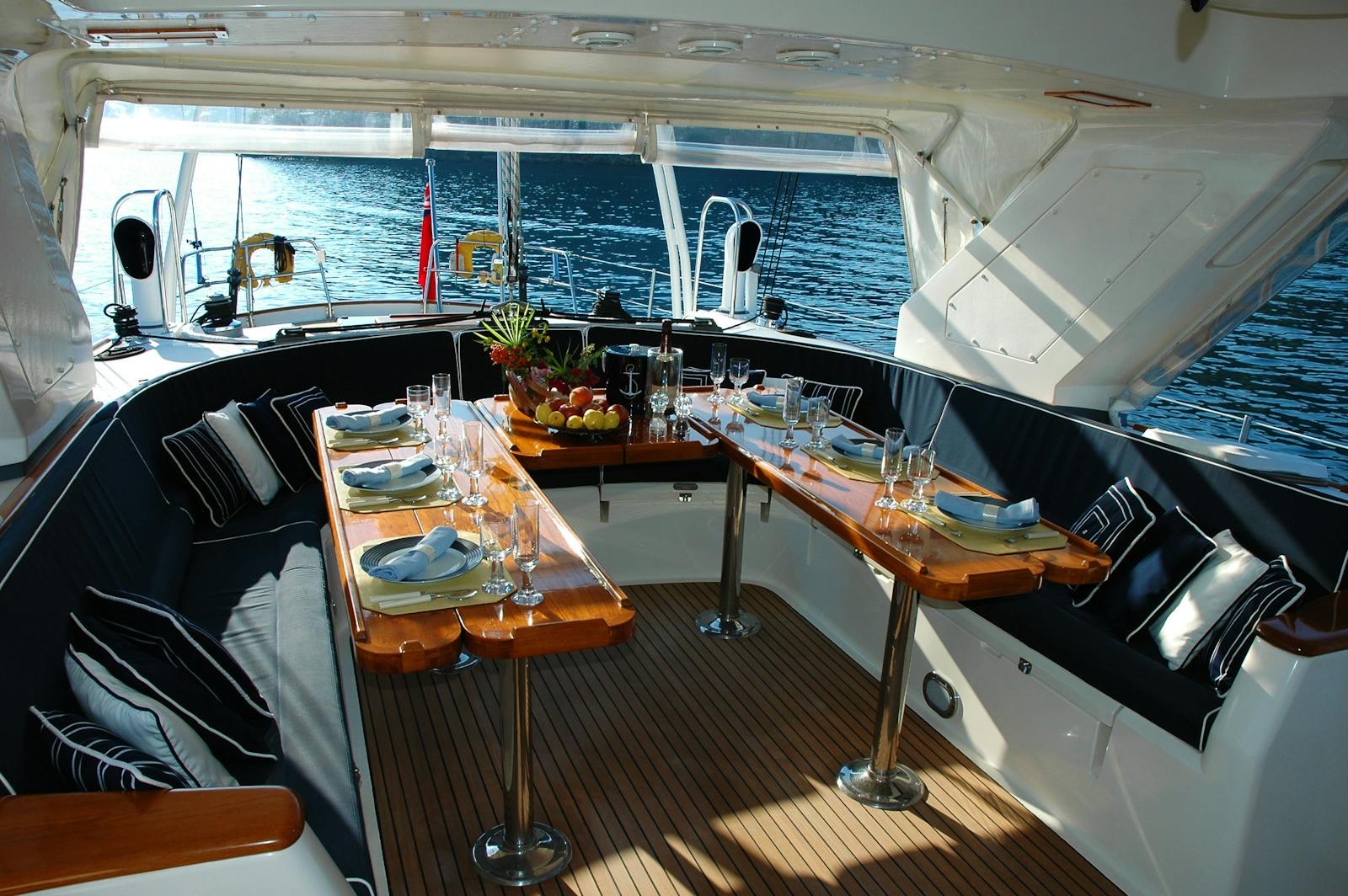
Can a company charter a yacht for a team event?
Yes. A company can charter a crewed yacht for a day, an evening or several nights, and pay by invoice like any other supplier. The charter contract is signed by the company, the crew are professionals, and the format ranges from a two-hour client dinner to a five-day leadership retreat.
What changes with a corporate booking is the paperwork around it. Brokers will quote to a company name, invoice the company, and arrange extras such as catering, branded flags, a presentation screen or a photographer. Ask for these at the quote stage. They are cheap to add on day one and awkward to add the week before.
The real constraint is group size, which is where most plans meet reality.
Why is 12 guests the usual overnight limit?
Because a yacht that carries more than 12 passengers is legally a passenger ship, and almost no charter yachts hold the certificate for that. Twelve is the ceiling for a normal commercial yacht under the Red Ensign Group Yacht Code (Part A covers up to 12 passengers, Part B covers 13 to 36) and under similar rules in other flag states.
"Passenger" means anyone who is not crew, so staff, clients, partners and children all count. Most owners keep to 12 rather than pay for the extra surveys, crew and safety equipment. Some yachts are licensed for fewer, often 6 to 10, so the number on a listing is a ceiling, not a promise.
Day trips can be different. Some larger yachts carry a passenger certificate for a day party. One 33 m motor yacht listed by the broker HELM sleeps 12 but is certified for 40 passengers. Brokers also report that on some boats crew count toward the day limit, so a nominal 12 can mean 10 or 11 guests. Ask the broker to confirm the certificate in writing, because the exact rule depends on the yacht's flag and survey.
So you have a handful of workable shapes:
| Group size | What works | Notes |
|---|---|---|
| Up to 12, overnight | One crewed yacht or catamaran | Check cabin count; 12 guests rarely means 12 private cabins |
| 13 to 40, one day | One passenger-certified yacht, or two standard yachts | Confirm the day-passenger certificate and crew count |
| 20 to 60, one day | A small fleet of 2 to 5 yachts, or one large event vessel | One host per boat; shared meeting point and schedule |
| 13 or more, overnight | Two or more yachts sailing together, or one yacht plus a hotel | No overnight bunking above the cap on a standard yacht |
| Larger events | Event boats, or a multi-yacht day with a shore-side dinner | Often cheaper per head than overnight |
Splitting into two yachts also splits the group socially. Put the managers on both boats, and plan where everyone meets for dinner or the evening swim. If you want to understand a sailing flotilla specifically (a different thing: several bareboats with a lead crew), see flotilla sailing explained.
What does a corporate yacht charter cost per head?
For a day on a single crewed yacht, the published listings below work out at roughly €250 to €800 per head, depending on group size, falling towards the bottom of that range on larger event boats. For several nights it is more, because you are paying for cabins, crew nights and fuel. These are market ranges from broker pages, not quotes, and they move with season and boat.
The numbers we can point to:
- Day charter, mid-size yacht. A Mallorca operator, bluebnc, says corporate day charters for 10 to 30 guests start at about €8,000 for a single yacht. That is roughly €270 to €800 a head, depending on numbers.
- Day charter, larger yacht. The 33 m yacht on HELM is listed at about €12,000 a day for up to 40 day passengers, so about €300 a head at full capacity.
- Overnight, up to 12 guests. Smaller crewed yachts and catamaran charters of 3 to 7 days sit in a wide band, from around €10,000 to €30,000 and well beyond. The 33 m yacht above is listed at about €65,000 a week and a 40 m yacht at €160,000. At 12 guests that is several thousand euros per head for a week, which is why most offsites choose two to four nights.
Whatever the base rate, ask what it includes. On larger yachts the base fee is usually quoted with an APA for fuel, food and drinks on top, plus VAT and dockage, plus crew gratuity. A good working rule: add 25 to 40 percent to the base for a realistic total. Our yacht charter cost guide goes through the line items.
One more number matters for corporate groups: hospitality. A catered lunch with wine for 30 on board is often the biggest variable. Agree the menu and drinks budget in advance rather than letting the APA absorb it.
Is a corporate yacht charter tax deductible in the UK?
It depends on who is on board and how much it costs per head. Entertaining your own staff can be deductible. Entertaining clients is not. Mixing the two splits the cost. Treat the following as orientation and have your accountant confirm it before you commit, because this is not tax advice.
Staff events. There is a specific exemption for an annual staff party or similar function. HMRC's Employment Income Manual says no tax arises on employees if the cost per head is £150 or less. Four details trip people up:
- The £150 includes VAT, and includes transport and overnight accommodation where it is provided so that people can attend. Flights to Palma and a hotel night count.
- Cost per head is the total cost divided by everyone attending, including guests who are not employees.
- The function must be annual and open to employees generally (or to everyone at one location). A one-off event, or an invitation to one team only, is not covered.
- It is a threshold, not an allowance. HMRC says if the cost goes over £150, the employees are taxed on the full cost per head, not just the excess. Go over by £1 and the exemption is gone.
A yacht day with flights will often clear £150 a head. A local day boat for a whole-company summer event can sit under it if the numbers are tight. Above it, the usual routes are a PAYE Settlement Agreement, where the company pays the tax and National Insurance on the benefit, or treating the trip as a genuine work offsite with a real agenda. Which one applies is an accountant's call and depends on the facts.
Client entertainment. HMRC's Business Income Manual says business entertainment of clients is not an allowable deduction against profits, with limited exceptions, and that includes the yacht. Staff entertainment is deductible, but not where it is only an incidental part of entertaining customers, so staff who go along as hosts do not make a client day deductible.
VAT. Under HMRC's VAT Notice 700/65, VAT on staff entertainment can generally be recovered, VAT on entertaining UK business contacts is blocked, and a mixed event is apportioned between staff and others. Overseas customers are not automatically blocked, but there are private-benefit and reasonableness tests that are easy to fail. All of that is the UK VAT position. A yacht chartered in Spain, Croatia or Greece will often carry local VAT on the charter, and whether you can reclaim foreign VAT is a separate question.
The practical takeaway: decide before booking whether this is a staff event, a client event or a mix, set the guest list to match, and ask your finance lead or accountant to approve the structure in writing. Retrofitting the story after the invoice arrives is where the trouble starts.
Which formats work, and where?
Match the format to the group, then pick the water.
One-day client or team event. Mallorca is the easiest from London: about two and a half hours' flight, a deep fleet in and around Palma and Port Adriano, and calm water from May to October. Cannes and Antibes work for a smaller, more formal group. Typical shape: board late morning, anchor for lunch and a swim, back by late afternoon so the group can go on to dinner.
Two to four night leadership retreat for up to 12. One crewed yacht, a captain and chef, a fixed agenda with a morning working session on deck or at anchor. Croatia from Split and the Greek Ionian from Lefkada are the quieter choices with good value. The Côte d'Azur is more expensive. The sibling guide on crewed catamaran costs in Greece shows what the per-head number looks like for a small group.
A larger offsite across several boats. Think two to five yachts sailing together, one meeting point, a shared evening ashore. This is the format for 30 to 60 people. It needs a lead coordinator on the water, a radio or WhatsApp group, and clear rules about who rides where.
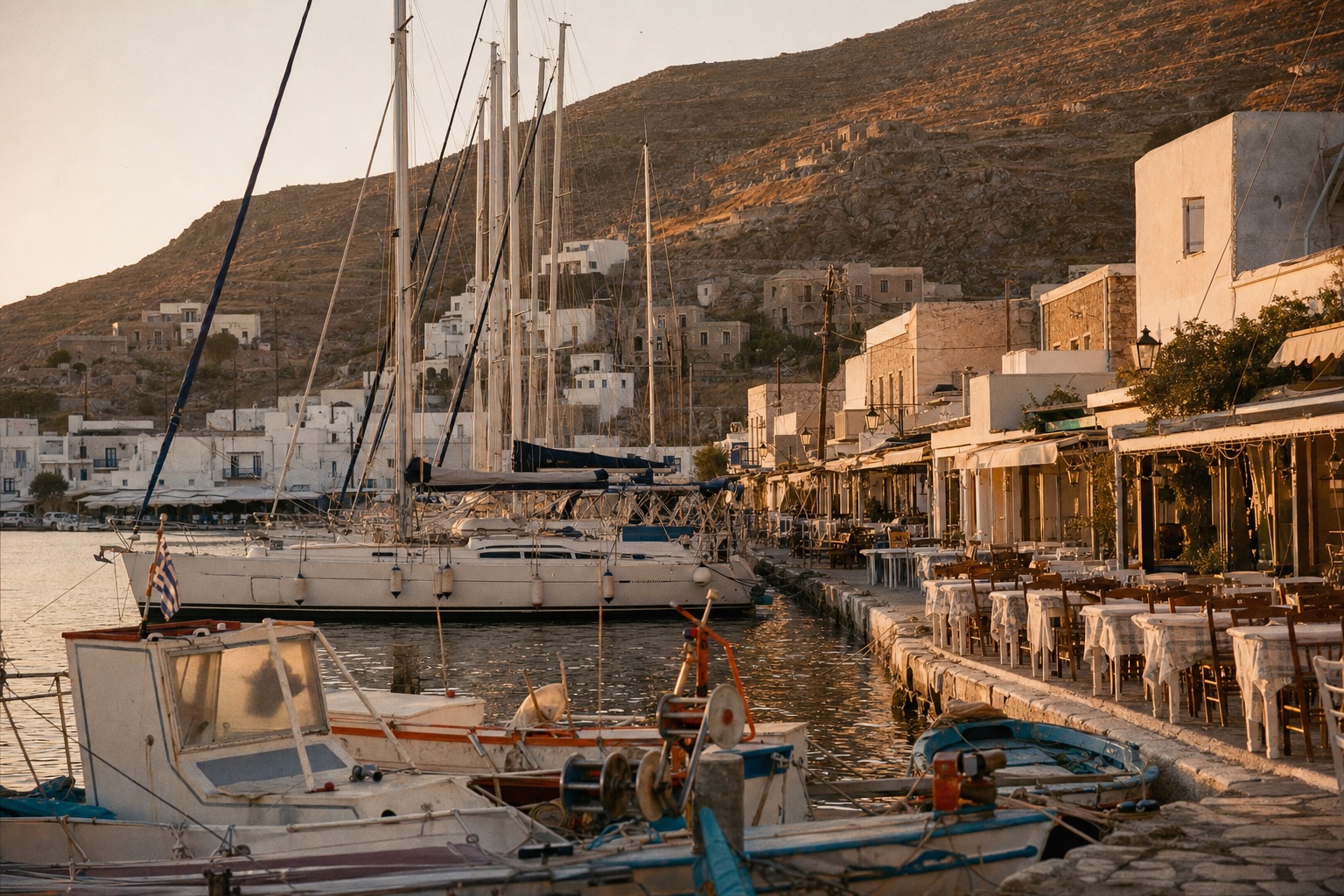
A tight itinerary matters more than a long one. Two short legs and a proper lunch beats six hours of motoring.
What goes wrong, and when to plan
Plan in this order: set the date range and guest list in October to January, ask for quotes in January or February, hold the yacht with a deposit by March, and finalise catering and guest details in the four weeks before. Peak July and August is the most expensive and the busiest. May, June and September have better availability and lower rates.
The details that go wrong:
- Guest count drift. A late addition pushes you past the cap, and a nominal 12 may mean 10 on a day charter. Lock the list early and ask the broker to confirm the passenger certificate.
- Insurance. The charter company's cover is for the vessel and its operation. Check what covers injuries to your staff and clients, and whether your own employer's liability or event insurance extends to an overseas activity. The charter insurance guide covers the common gaps.
- Alcohol. Agree a drinks budget and who signs off on extras. People on a boat in the sun drink more than they expect, and your people are still your responsibility.
- Seasickness. Some of the group will be ill on a breezy day. Choose a calm window and a stable boat, and read our guide to what actually works for seasickness.
- Accessibility. Boarding is usually by a gangway or a tender, and stairs are narrow. Tell the broker about anyone with mobility needs when you ask for quotes, because it narrows the choice of yacht.
- Confidentiality. Satellite Wi-Fi is slow and shared. If you will discuss anything sensitive, ask about crew non-disclosure terms and agree what is allowed on screens and in photos before the day.
- Swimming, water toys and waivers. Decide in advance what is permitted and who signs what.
Corporate charter checklist
- Decide staff, client or mixed, and agree the tax treatment with your accountant.
- Fix headcount, including crew, and check it against the passenger certificate.
- Choose day, overnight or multi-yacht based on the group, not the other way round.
- Set a total budget per head, including flights, hotel, VAT, APA and gratuity, and compare it to £150 if the staff exemption matters.
- Pick the window: May, June or September for the best mix of weather and availability.
- Get written quotes with inclusions listed, and ask what the cancellation terms are.
- Confirm insurance cover for guests, not just the vessel.
- Brief guests on dress, swimming, medication, dietary needs and accessibility.
- Name one on-the-day coordinator and one backup.
- Keep invoices, the guest list and the business purpose together for your accountant.
If you would rather hand it over
Most of the work in a corporate charter is comparison and chasing: which yachts hold the right certificate for your headcount, what the quotes include, and who is answerable if a boat falls through in June. At Sulu we look across the market, put the numbers side by side and make the calls with you, with the best research tools we can find and people who check what comes back. The plan arrives with the details already tested.
See yacht charters for how we work, or our business page if the request is for a team or a company.