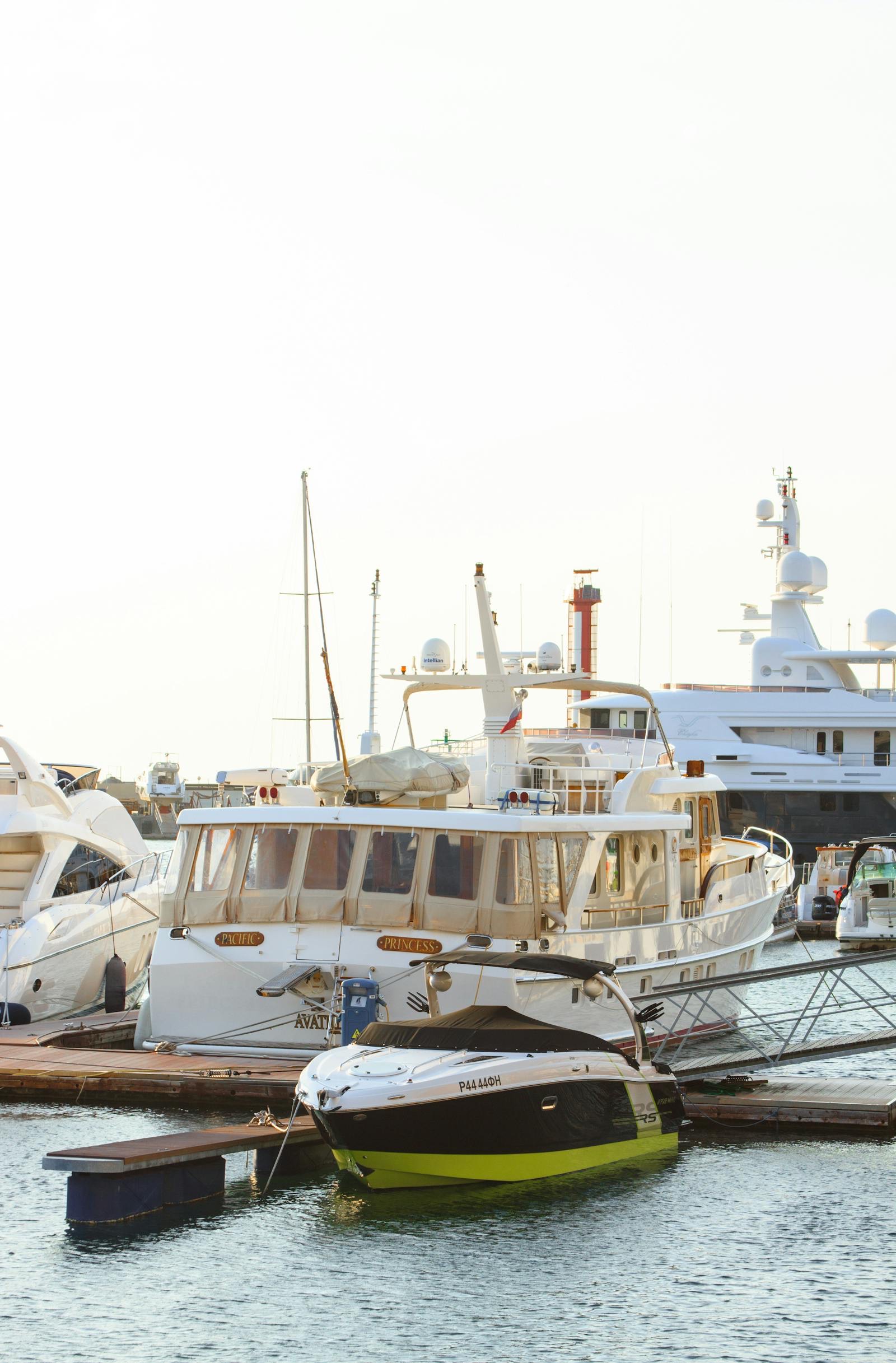
Berthing is the part of a charter week that no one plans for and everyone ends up dealing with at four in the afternoon with a tired crew and a rising wind.
The apps have improved a great deal. What has not changed is that a good part of the Mediterranean still runs on a VHF call and a marinero in a RIB, and any tool that claims otherwise is overselling. Here is what each one is actually good for.
Navily — The One to Install First
If you install one app, install this one. Navily covers roughly 35,000 marinas and anchorages, carries over half a million user reviews and photos, and has something in the region of 1.2 million users, which matters because the value is almost entirely in what other sailors have written.
The reviews are the product. A marina entry will tell you that the pontoon on the western side has no shore power despite the website saying otherwise, that the holding in the bay south of the harbour is poor in anything over 15 knots from the east, that the supermarket is a twenty-minute walk uphill. This is the information that decides where you spend the night, and no official marina listing contains any of it.
Around 700 marinas accept bookings directly through the app. That number sounds small against 35,000, and it is, but the bookable ones skew towards exactly the busy places where you need a berth confirmed — the Croatian ACI network, chunks of the Balearics, a fair spread in Italy and Greece.
The anchorage database is arguably more useful than the marina one. Each anchorage carries depth, holding, shelter by wind direction, and photographs taken from boats. For itinerary planning it is better than any pilot book we own, with the caveat that pilot books are edited and user reviews are not.
Cost: free tier covers the database, reviews and photos. The paid tier adds offline use and better filtering, which is worth having if you are somewhere with patchy data coverage.
Dockwa — Excellent, and Almost Useless in Europe
Dockwa is the dominant berth-booking system in North America. Thousands of marinas run their reservations through it, it handles payment and confirmation properly, and if you are chartering in New England, Florida or the Chesapeake it is the tool.
In the Mediterranean it is close to irrelevant. We mention it because search results conflate the two markets constantly and you will find American reviews recommending it for a Croatian trip, where it will show you nothing.
The Marina's Own Website — Still Where the Berths Actually Are
Unglamorous and frequently the correct answer.
The larger networks take reservations directly and often only directly. ACI Marinas in Croatia runs its own booking system across its 22 marinas, which is a serious advantage on the Dalmatian coast in August. Marina Porto Montenegro, Marina di Portofino, Port Vauban in Antibes, most of the Balearic ports — all take bookings through their own sites, none through an aggregator.
For a peak-season itinerary along a busy coast, the honest workflow is to identify the three or four nights where you genuinely cannot risk arriving without a berth, book those directly on the marina websites months ahead, and stay flexible for the rest.
MarinaReservation and the Aggregators
MarinaReservation.com and similar aggregators sit between you and a few hundred European marinas. They are useful for a quick sweep of what exists along a stretch of coast, and less useful for confirming, because availability shown is not always availability held.
Treat them as a directory rather than a booking engine. Find the marina, then go to the marina.
VHF Channel 09, Which Beats All of the Above
Here is the part the app roundups leave out.
A significant number of Mediterranean marinas — including many good ones in Greece, Turkey, southern Italy and the Croatian islands — do not take advance bookings from private boats at all. They allocate berths on the day, by VHF, in the order people call.
The convention is channel 09 in most of the Med, though it varies and the pilot book for your area will say. The practice that works: call between 09:00 and 10:00 for that evening, give the boat name, length, beam and draft, and ask for a berth. Marineros are used to charter crews and are generally patient with the sailing-school version of the exchange.
Calling at 10am is the single most effective berthing tactic in the Mediterranean, and it costs nothing. Arriving at 17:00 in August without having called is how people end up rafted three deep against a fishing boat, or motoring another two hours to the next bay.
What Berths Actually Cost
Rough August figures for a 45-foot monohull, which is the most common charter size:
| Region | Per night, high season | Notes |
|---|---|---|
| Croatia | €60–120 | ACI network at the upper end; town quays cheaper |
| Greece | €50–100 | Many town quays are far cheaper, some are free |
| Turkey | €40–90 | Best value in the Med, marinas well run |
| Italy (Sardinia, Amalfi) | €90–250 | Porto Cervo is its own category entirely |
| France (Riviera) | €150–400 | Antibes, Saint-Tropez, Monaco in season |
| Balearics | €80–200 | Ibiza in August is the outlier |
Two things move these numbers more than people expect. Catamarans pay roughly 1.5 to 2 times the monohull rate, because a cat occupies the width of two berths and marinas charge on width. And shoulder season is not a small discount — the same berth in Hvar in late September can be 40 to 50% below the August rate.
This is one of the line items that turns a tidy charter quote into a considerably larger bill, and we walk through the full set in Hidden Costs of Yacht Charter.
How We Actually Plan a Week
For what it is worth, the sequence we use when planning a charter itinerary for a client:
Start in Navily with the anchorage layer on, and sketch the route by where the good anchorages are rather than by distance. Anchoring is free, quieter, and usually the better night. Identify the nights that genuinely need a marina — water, fuel, a crew change, a restaurant booking, weather coming through — and there are normally two or three in a week rather than seven. Book those directly with the marinas, months ahead if it is July or August. Leave the rest open and call on channel 09 at ten in the morning.
The mistake we see most often is booking every night in advance, which locks you into a schedule and then forces you to sail in conditions you would otherwise sit out. A charter week with three fixed nights and four flexible ones is a better week than one with seven fixed nights, and it is cheaper.
For how the route itself comes together, How to Plan a Yacht Charter Itinerary covers the day-by-day version, and the Croatia Route Planner has four worked Dalmatian routes with maps.
If you would rather not do any of this, itinerary and berth planning is part of what we handle when we arrange a charter. From £200 per request.