The Best Week in Italy That Nobody Books
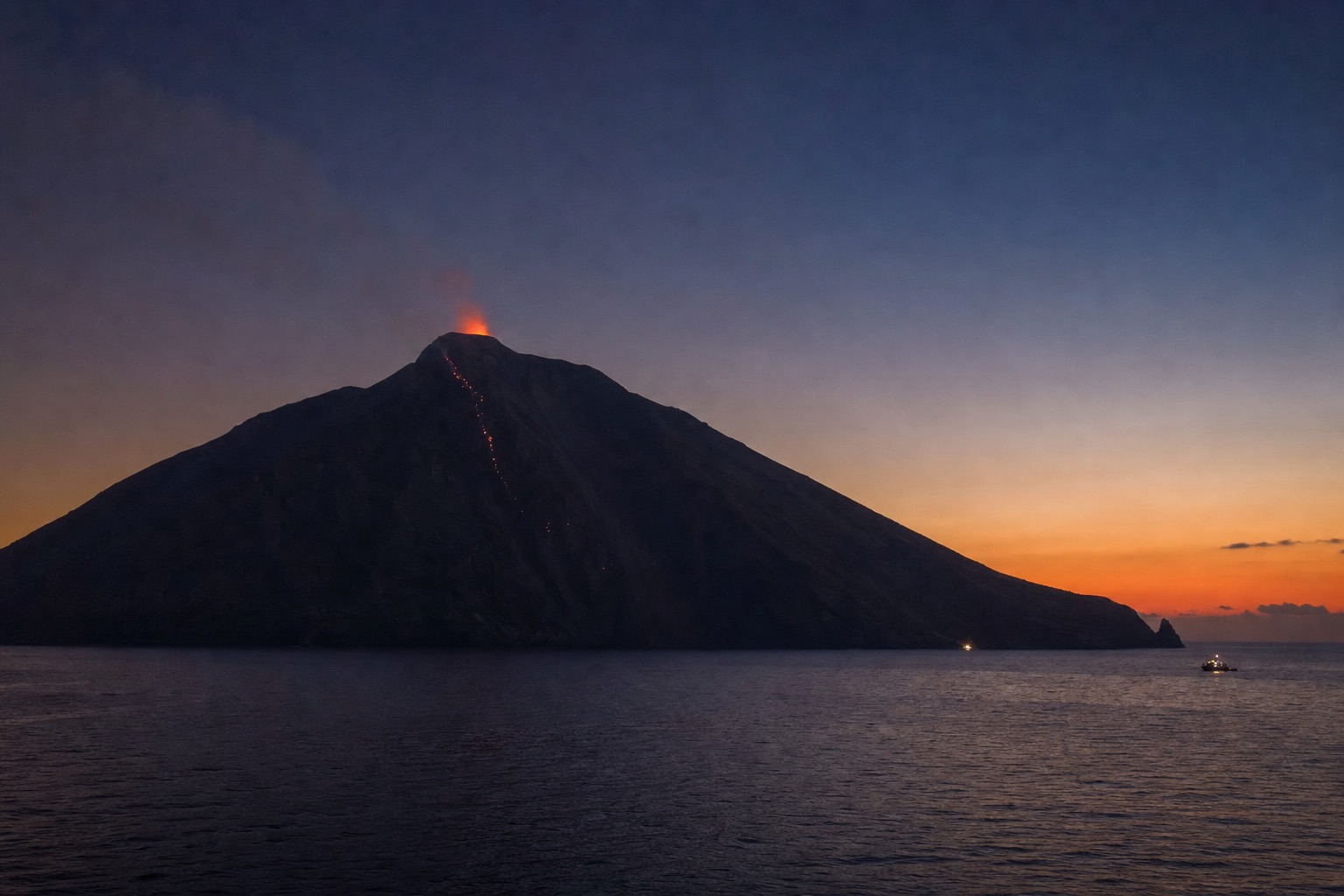
Sailing the Aeolian Islands means seven volcanic outcrops strung off Sicily's north coast, five to fifteen nautical miles apart, with an active volcano that performs every half hour after dark. The Aeolians deliver the most distinctive sailing week in Italy for roughly sixty percent of what the same week costs on the Amalfi Coast.
So why does everyone end up in Positano instead? Geography, mostly. The islands demand a decision: you fly to Catania or Palermo, drive an hour-plus to the coast, and commit. The Amalfi Coast lets people drift into it. The reward for the effort is a week with black-sand beaches, sulphur vents hissing at the waterline, and dinners that cost what Positano charges for bread.
What Does Sailing the Aeolian Islands Cost?
| Item | Typical cost | Notes |
|---|---|---|
| Mooring buoy, overnight | €20-50 | Most islands; book nothing, arrive by mid-afternoon |
| Marina berth (Salina, summer) | ~€160/night, 44ft | The priciest slip in the group |
| Bareboat monohull, 40-45ft, peak week | €3,500-6,500 | Compare Amalfi-area equivalents nearer €5,000-9,000 |
| Crewed 15-20m motor yacht | €14,000-25,000 | Below Amalfi equivalents |
| Dinner ashore per person | €35-70 | Panarea runs higher; it knows what it is |
Vulcano's famous mud baths reopened for the 2026 season after several years shut behind legal disputes, which is worth knowing because half the internet still lists them as closed. Entry is cheap, the smell arrives before you do, and your skin will feel odd for hours afterwards. Everyone should try it once.
The Seven Islands, Ranked Honestly
Stromboli is the reason to come. The volcano has erupted at steady intervals for centuries, and boats hold position off the Sciara del Fuoco after dark to watch sparks arc against the sky. From your own deck, at anchor, this costs nothing. Note the pattern of sudden rule changes though: landings were barred until late May 2026 while storm damage to the jetty got fixed. The eruptions continued throughout; only going ashore was affected.
Salina is the food island. Capers, Malvasia grapes, and the twin extinct cones of Monte Fossa delle Felici above. Da Alfredo in Pollara sells the granita that Il Postino made famous. Marina berths here cost more than buoys elsewhere; the town justifies one night.
Lipari is the practical capital: provisioning, chandleries, the excellent archaeological museum, and the largest town. You will almost certainly spend a night here sorting logistics. Fine. Its castle walls at sunset earn the stop anyway.
Panarea is the glamorous one, all whitewashed houses, golf-cart taxis and Hotel Cincotta aperitivi. Prices know their audience. One evening here is fun; a whole week would be expensive theatre.
Vulcano has the mud baths, steaming fumaroles along the harbour, and the black-sand bay currently losing an argument with erosion. Swim off the boat rather than fighting for shrinking beach space.
Filicudi and Alicudi are the quiet ones at the western end, where the week goes when you want silence. Pecorini a Mare on Filicudi is a hamlet of stone houses and one perfect terrace bar. Alicudi has no cars and 100,000 steps; pack accordingly or don't go up.
A Week From Milazzo
Day 1: board at Milazzo, motor two hours to Vulcano, mud baths, overnight in the lee. Day 2: north to Lipari, town afternoon, marina or anchorage. Day 3: Salina, Pollara swim if the swell allows, dinner ashore. Day 4: Panarea, afternoon at Lisca Bianca shallows, Cincotta cocktails. Day 5: short hop to Stromboli, village walk at San Vincenzo, then the night show off Sciara del Fuoco. Days 6-7: west to Filicudi (Pecorini lunch, La Canna rock swim stop), then run home to Milazzo.
Total distance: around 110nm spread over a week. Nothing exceeds three hours' motoring. This suits mixed crews, children, and anyone whose idea of sailing includes actually reading a novel at anchor.
Season and Practicalities
May-June and September are ideal: warm water, mooring buoys available at sensible hours, and the sirocco less inclined to fill the air with Saharan dust. July-August works but Panarea and Vulcano get busy, so arrive at popular bays before noon or after five.
Fly into Catania (two hours' drive to Milazzo) or Palermo (similar to the western ports). Reggio Calabria also serves Milazzo-side charters. Our aviation team flies clients into Catania regularly and arranges the transfer; the drive is dull enough that we will be honest when a scheduled flight plus driver beats everything else.
Bareboat skippers need a recognised qualification; Italy checks properly. No licence? A skippered charter solves it, as our licence explainer covers.
What the Wind Does Here
Three named winds shape an Aeolian week, and knowing them turns route planning from guesswork into arithmetic.
The maestrale blows from the northwest, strongest in July and August. It makes the western islands (Filicudi, Alicudi) lively and pushes swell into west-facing bays; when it blows, run the week clockwise from Milazzo so those islands sit behind you. The scirocco arrives hot from the south, sometimes carrying Saharan dust that coats decks in orange film by morning. It flattens the northern anchorages and makes Vulcano's fumaroles extra theatrical. And the local thermal breeze builds most afternoons between the islands, dying again by sundown; mornings are for passages, afternoons for swimming.
None of this is dangerous weather for a competent skipper in season. It is simply the difference between a week that flows and one spent motoring into chop because someone planned the legs backwards.
Provisioning Without Drama
Milazzo has proper supermarkets minutes from the marina, including one of those enormous Ipersimply-format stores where a week's shopping for eight costs what dinner for four does on the Amalfi Coast. Stock the boat here rather than hoping island shops deliver; Lipari town can fill gaps, but Salina westwards gets thin and expensive fast.
What to buy more of than seems reasonable: water (island taps run brackish), coffee (Sicilian roasts beat anything on offer mid-route), and capers, obviously, since you will be sailing past the bushes that grow Europe's best. Every island harbour has a bakery by eight in the morning; brioscia with granita counts as breakfast here, not dessert, and arguing with that is pointless.
One provisioning trap: fuel. Not every island quay sells it to visiting yachts in high summer, and queues at Lipari's fuel dock can eat an afternoon. Arrive with full tanks from Milazzo and top up only if the plan changes.
With Children Aboard
Short legs, warm water and volcano spectacle make this one of the better Italian weeks for families, within limits. The honest constraints: most mooring buoys and harbour walls have no lifeguard and few rails, night-time deck movement around an anchorage needs discipline, and Stromboli's show runs late (the good eruptions start after children's bedtimes in June, though August dusk timing suits them better).
Two adjustments make it work. Shift the itinerary an hour earlier than adult crews would run it, so swimming stops happen before lunch and arrivals land before the afternoon wind. And pick your boat for deck space rather than cabins: a 45-foot catamaran gives children a trampoline-free foredeck and parents sightlines everywhere, which matters more at anchor than any marina brochure suggests. Our family charter guide goes deep on the rest.
Why We Rate It Above Its Reputation
The Aeolians ask more of the traveller than Positano does and return more per euro than anywhere else in Italy. They suit mixed-confidence crews, food-motivated couples, geology-obsessed teenagers, and anyone tired of Mediterranean towns where every second shop sells the same ceramics. If the Aeolians sound like your kind of week, message us your dates. We will match boats based in Milazzo or Portorosa and send real availability within 48 hours. WhatsApp or Telegram. For the rest of the country, our Italy sailing guide compares all three regions side by side.