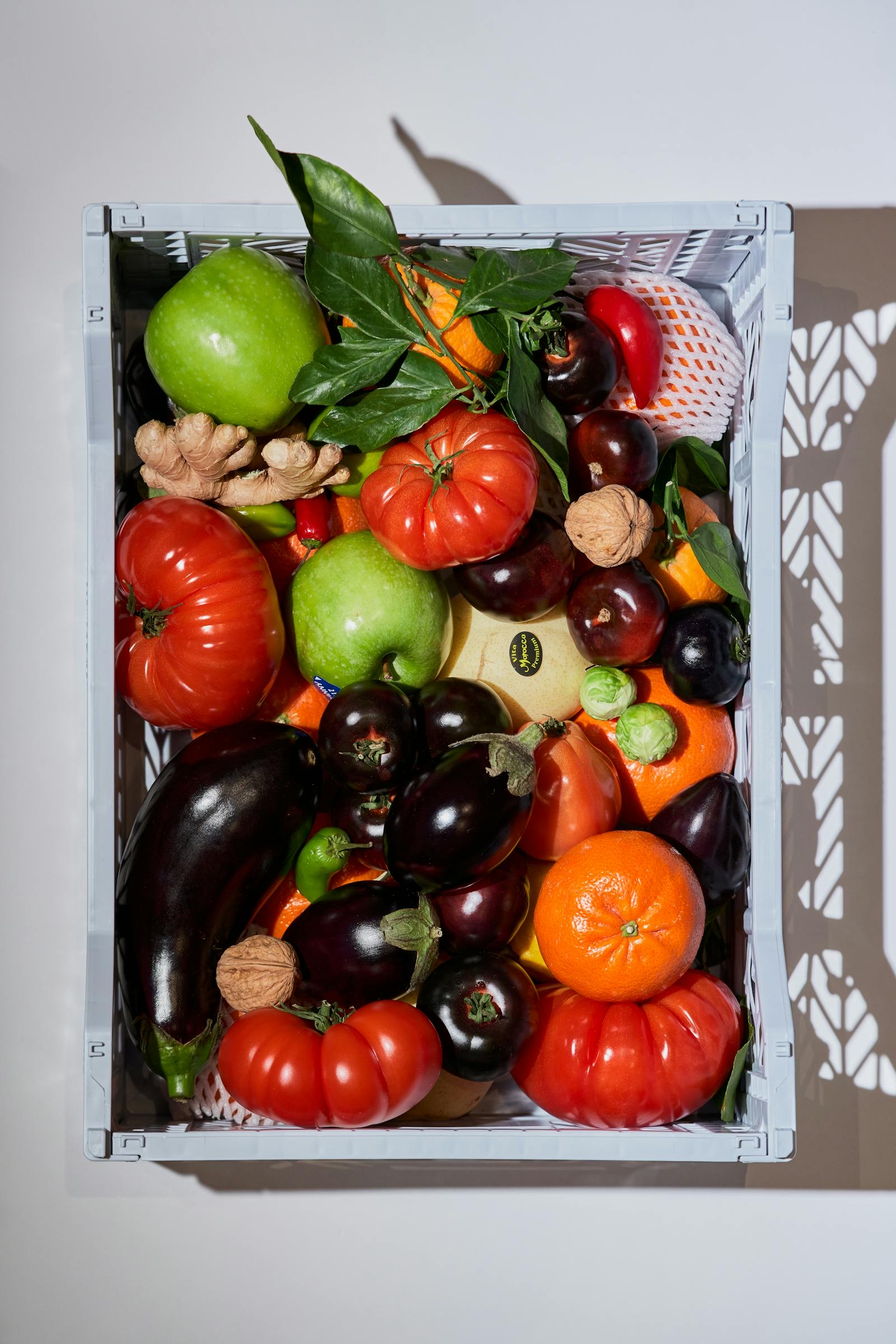
Nobody talks about provisioning until they are on the boat and realise they have no idea what they are supposed to eat for the next seven days. This guide tells you everything you need to know about feeding a charter yacht, whether you have a crew doing it for you (and you need to fill in a preference sheet correctly) or you are bareboat and doing it yourself.
The short version: on a crewed charter, the chef will do an excellent job if you give them good information and a realistic budget. On a bareboat, your provisioning strategy is the single biggest determinant of how much cooking you do versus how much you eat ashore. Get this right and the week runs itself. Get it wrong and you spend two days of your holiday in supermarkets.
What "Provisioning" Actually Means
On a crewed charter, provisioning means everything the boat needs to feed you: food, drink, ice, snacks, fresh flowers, cleaning supplies, toiletries. It is handled by the chef and stewardess and paid for out of the APA (Advance Provisioning Allowance). You do not physically provision anything. You fill in a preference sheet before the charter and the crew does the shopping.
On a bareboat charter, provisioning means you (or a delivery service you hire) physically buying food and drink for the week and loading it onto the boat on day one. There is no APA on a bareboat. Whatever you spend on food and drink, you spend out of pocket, on top of the charter fee.
This distinction matters because almost everything else about provisioning depends on which model you are on. If you are not sure which suits you, read our bareboat vs crewed guide first.
Crewed Charters: APA Budget Explained
On a crewed charter run on MYBA contract terms, APA is typically set at 30 per cent of the base charter fee and covers everything variable: fuel, dockage, food, drink, ice, laundry, shore excursions, and the small incidentals (newspapers, flowers, taxis for the crew). It is paid upfront into an account the captain manages. Anything unspent is refunded at the end of the charter. Anything overspent is billed.
For a 100,000-euro-a-week crewed motor yacht, that is 30,000 euros of APA. Roughly how it breaks down in a typical Mediterranean week:
| Category | Share of APA | For 30,000 EUR APA |
|---|---|---|
| Fuel | 25-40% | 7,500-12,000 EUR |
| Food and drink | 25-40% | 7,500-12,000 EUR |
| Berthing and dockage | 15-25% | 4,500-7,500 EUR |
| Crew tips (if paid from APA) | 0-10% | 0-3,000 EUR |
| Incidentals, laundry, shore | 5-15% | 1,500-4,500 EUR |
The food and drink share depends heavily on how you cruise. A week spent at anchor eating all meals on board will push food costs up because the boat is buying for 6 to 10 guests and 4 to 6 crew, 21 meals plus snacks. A week of lunches ashore and dinners out will push berthing and shore costs up and food costs down.
For fuller context on what APA actually is, see our APA explained article.
The Preference Sheet: What the Chef Actually Wants to Know
Every crewed charter sends you a preference sheet a few weeks before the charter. It is the single most important document you fill out for the week. Get it right and the chef can cook you a genuinely excellent week of food. Get it wrong or leave it vague and you will eat fine, but not great.
Here is what a good preference sheet looks like and how to answer each section honestly.
Dietary restrictions and allergies. List everything. Even mild ones. A chef planning a week's menu needs to know before they shop, not after. Distinguish between "cannot eat" (allergy, coeliac, religious) and "prefers not to" (dislikes olives, hates coriander). Both matter but differently.
Favourite and disliked foods. The chef is going to cook five to seven dinners on the boat. You will eat each of them, so think about what you actually like. "No strong cheeses" is useful. "Good Mediterranean food" is not. Be specific: "Grilled fish, pasta, vegetables. No heavy red sauces. Not a fan of lamb." The more specific you are, the less likely you are to get a week of generic hotel food.
Cuisines. If you want Italian, say Italian. If you want a mix, list the cuisines you want to see. In the Med, chefs are generally best at Italian, French, Mediterranean, and Greek, less consistently good at Asian or Middle Eastern fusion. Ask for what they are known for.
Drinks. This is where most people undershoot. Be specific.
- Wine: tell them the kinds you like (Sancerre, Chablis, Provence rosé, Chianti) and the rough budget per bottle (30, 60, 120 euros). A good chef will stock accordingly. If you leave it blank, expect fine but generic selections.
- Spirits: list your brands. "Gin and tonic with Hendrick's", "Negroni with Campari and Tanqueray", "Nobu-style sake". The bar will stock what you drink.
- Champagne: say how much you want on board and what marque. If you want Dom Pérignon on the welcome tray, it has to be on the order list.
- Beer: list brands.
- Coffee: espresso machine vs drip, beans you like, how many cups the group drinks a day.
- Soft drinks: kids' drinks, low-sugar options, specific sparkling water brands.
Snacks. Crisps, olives, nuts, ice cream, sweets. People forget to mention these and then wish they had. Chefs stock a good pantry if they know what you like.
Special meals. If there is a birthday, anniversary, or a specific night you want dinner ashore at a famous restaurant, flag it now. The chef will plan around it and won't prepare a duplicate meal.
Kids. Ages, what they actually eat, whether they want adult dinners with the adults or their own early dinner. Chefs are usually very good with kids if you give them information. Without it, kids end up with "kids food" (pasta, chicken nuggets) all week.
Real Food Budgets on a Crewed Charter
Here is what you can expect a chef to produce at different budgets. These are per guest per day, food only, not including alcohol or fuel or berthing.
| Budget per person per day | What you get |
|---|---|
| 40-60 EUR | Good home-cooked Mediterranean. Fresh fish, pasta, salads, local produce. No premium ingredients. Mid-tier wines. |
| 80-120 EUR | Restaurant-quality cooking. Local catch, premium olive oils, fine pastas, proper cheese board. Good wines at 30-60 EUR a bottle. |
| 150-200 EUR | Michelin-level attention. Caviar, lobster, premium beef, truffle in season, top-tier cheese, excellent wines at 60-150 EUR a bottle. |
| 250 EUR+ | The chef has no constraints. Any ingredient, any wine. This is where a good chef on a superyacht genuinely shines. |
Crew food is budgeted separately at around 10 to 15 euros per crew member per day. You do not need to worry about it. It comes out of the same APA line but the chef manages it independently.
The most common mistake on the preference sheet is leaving the wine section vague and then being disappointed. If you are the kind of person who cares what you drink, fill out the wine section like you are ordering from a proper wine list. If you say nothing, the chef will buy safely and forgettably.
Bareboat Provisioning: The Actual Strategy
On a bareboat, you are the chef, the stewardess, and the budget committee. Here is how to do it without losing a day of your week to a supermarket run.
Option 1: Order in advance, delivered to the marina. The best approach for most people. Every major Mediterranean charter base has at least one provisioning service that will deliver your food and drink to the boat on day one. In Croatia, companies like Captain's Food Market, Yacht Provisioning Croatia, and others run this service. In Greece, most base marinas have local operators. In the BVI, Bobby's Marketplace is the standard. You email them a list two weeks before the charter. They deliver, you stow, you sail.
Expected cost markup on supermarket prices: 10 to 20 per cent. Worth every euro because you save four hours and two taxi rides on day one.
Option 2: Base-town supermarket on day one. Free but slow. You arrive at the boat, turn around, taxi to the nearest big supermarket (Konzum in Croatia, Sklavenitis or AB in Greece, Mercadona in Spain), fill three or four trolleys, and taxi back. Expect to spend half your first afternoon on this. Advantage: full control, best prices. Disadvantage: you are on holiday and you just spent four hours shopping.
Option 3: Mixed approach. Order the heavy and bulky stuff in advance (water, beer, wine, frozen items, cleaning supplies) and buy fresh stuff on day one or on the way through the islands. This is what most experienced charterers do. The boat leaves the marina loaded with essentials, and you top up fresh fruit, bread, fish and vegetables as you go.
The minimum you should have on board after day one: enough for two full days of meals and drinks, plus all of the beer, wine and water for the week. Fresh produce can wait. Heavy beverages should be done once.
Realistic Bareboat Food Budgets
This is what to expect for a typical group of six to eight adults on a week-long bareboat charter in the Mediterranean, eating most meals on board with two or three dinners ashore.
Groceries only, six adults, seven days, mixed diet, mid-range quality:
- Croatia: 180-250 EUR per person for the week (25-35 EUR a day)
- Greece: 150-220 EUR per person (20-30 EUR a day)
- Italy: 220-300 EUR per person (30-45 EUR a day)
- Turkey: 130-200 EUR per person (18-28 EUR a day)
- France (Riviera): 300-450 EUR per person (45-65 EUR a day)
- BVI and eastern Caribbean: 350-500 EUR per person (50-70 EUR a day)
Add drinks on top. Wine at supermarket prices is around 6 to 12 euros a bottle in most Med countries, 15 to 30 euros in France. Beer is 1 to 2 euros a can. Spirits are expensive everywhere and bringing a duty-free bottle each is common.
Meals ashore budget:
- Croatia and Greece: 30-50 EUR per person
- Italy and France: 50-120 EUR per person
- Turkey: 20-40 EUR per person
- BVI: 50-90 EUR per person
Plan for two to four meals ashore in a seven-day week. More and you are wasting provisioning. Fewer and you are missing the point of a charter.
What to Buy First: The First-Day Supermarket List
If you are doing a base-town supermarket run on day one, here is the order to shop in. Start with the heavy items so you do not run out of space in your trolley.
Water: One 1.5-litre bottle per person per day minimum. For eight people for a week, that is 56 bottles. Load this first.
Beer: A case per three drinkers per week is a conservative estimate. A case per two drinkers if you have a hard-drinking group.
Wine: Two bottles per wine drinker per day is a safe assumption for a relaxed charter. One bottle for moderate drinkers. Err on the side of more; you can bring unopened bottles back.
Soft drinks and mixers: Coke, tonic, sparkling water, juice. Several 1.5-litre bottles of each.
Frozen and chilled: Butter, milk, yoghurt, cheese, cured meats, bacon, ice cream. Buy fresh what you will eat in the next 48 hours; buy long-life for later in the week.
Pantry staples: Pasta, rice, olive oil, salt and pepper, coffee, tea, sugar, cereal, bread, crackers, jam, honey, peanut butter, tinned tomatoes, tinned tuna.
Fresh produce: Tomatoes, cucumbers, lettuce, peppers, onions, garlic, lemons, potatoes, carrots, fruit (bananas, apples, berries). Buy for two to three days; replenish from local markets as you go.
Meat and fish: Enough for the first two dinners. Buy fresh from local markets or fish quays afterwards.
Breakfast: Eggs, bacon, fruit, yoghurt, bread, croissants if available.
Lunch: Cheese, cured meats, bread, salad ingredients, fruit. Lunch on a charter is almost always a salad-and-platter affair. Plan accordingly.
Cleaning and kitchen: Washing-up liquid, dish cloths, kitchen roll, rubbish bags, cling film, foil, zip bags.
Medications and first aid: Sun cream (much more than you think), after-sun, seasickness tablets, ibuprofen, antihistamines, plasters, antiseptic.
Wine and Alcohol: Specific Notes
Buying locally vs bringing your own. Wine in Mediterranean supermarkets is significantly cheaper than in UK supermarkets for equivalent quality. A decent Provence rosé that is 15 pounds in the UK is 6 to 9 euros in France, 8 to 12 euros in Italy, 10 to 15 euros in Croatia. There is no reason to bring Med wine with you unless you have a specific bottle you want.
Bringing your own. For spirits and champagne, duty-free is usually your cheapest option. A litre of gin or vodka at Heathrow duty-free is significantly cheaper than the same bottle in a Croatian or Greek supermarket. Each passenger can bring one litre of spirits plus wine and beer within allowances. For a group of eight, that is eight bottles of premium spirits through duty-free, which covers most of a week.
Monaco, French Riviera, Capri and the like. Wine and alcohol are expensive in these specific high-end destinations. If you are chartering here, load the boat up in a cheaper base (Nice, Toulon, Naples) before you arrive.
On a crewed charter with APA. Wine goes through APA at the price the chef pays plus a small handling margin. If you are picky, either specify on the preference sheet or ship your own wine to the boat from your preferred merchant before the charter. Top brokers will facilitate this; most crews are relaxed about it.
Dietary Requirements and Allergies
Coeliac disease. Every Med cruising ground has gluten-free pasta, bread and flour in supermarkets. On a crewed charter, warn the chef well in advance. On a bareboat, stock your gluten-free staples on day one because resupplying in smaller ports is harder.
Vegetarian and vegan. Easy in the Med. Hard in the Caribbean and some Turkish bases. Tell the chef what you actually eat, not "I'm vegan" alone. A vegan who eats a wide range of foods is easier to cook for than one who only eats a narrow selection.
Nut allergies. Tell the crew in big letters on the preference sheet. Nuts are everywhere in Mediterranean cooking (pesto, pastries, cakes, pastes) and a chef needs to plan the menu around this.
Halal and kosher. Specify to the chef. Halal meat is available in most Med countries. Kosher is harder and usually requires ordering from a specialist supplier in advance. Flag at booking, not at boarding.
Child dietary needs. Specify on the preference sheet by age. "Two-year-old, still on finger foods, no whole nuts, likes pasta and fruit" is useful. "My kid is fussy" is not.
Provisioning for Kids
Kids need a different strategy. A few practical notes.
Hydration is the biggest issue. Kids drink more than you expect in hot weather, and they will not drink water on their own. Stock them up on watered-down juice, flavoured water, coconut water, and ice lollies.
Snack supply. Kids snack constantly. Crackers, cheese, fruit, mini sausages, breadsticks, yoghurts, cereal bars, biscuits. Buy more than you think. Snacks are a form of crowd control on a boat.
Dinner timing. Most charter kitchens can do an early kids' dinner at 6 pm and an adult dinner at 8:30 pm. On a bareboat, you do this yourself. It is almost always worth the split.
Treats. Ice cream, biscuits, chocolate. Every kid remembers the boat holiday by the ice cream.
Common Mistakes (And How to Avoid Them)
Under-provisioning alcohol. The most common mistake on bareboat charters. Groups consistently drink more than they expect on holiday, especially in hot weather and with good food. Buy 50 per cent more than your home consumption suggests and you will still be fine at the end of the week.
Over-provisioning perishables. The opposite of the alcohol problem. Do not buy a week's worth of fresh fish on day one. Buy for two days and replenish. Everything else rots.
Ignoring the wine section of the preference sheet. See above. Fill it in properly.
Forgetting toiletries. Sun cream runs out fast. Factor 30 and 50, lip balm, after-sun, shampoo for saltwater-dried hair. Most charter boats provide basic shampoo and shower gel but not good ones.
Not asking about dietary requirements in the group. The charter organiser asks the group "any food issues?" and gets a vague yes. Ask specifically and write it down.
Leaving drinks water to the last minute. In the Mediterranean, boats do not make drinkable water. You drink bottled. For eight people for a week, that is roughly 90 to 120 litres of drinking water. Do this on day one.
Not building in a provisioning stop halfway through. On a longer cruise or a larger group, plan a mid-week provisioning stop in a port with a proper supermarket. Do not try to stretch day-one provisions across seven days.
How Sulu Helps
On a crewed charter, the chef does the work, but the preference sheet is where you either get what you want or you do not. We will walk you through the preference sheet before you submit it, translate vague preferences into specific instructions the chef can actually use, and coordinate any special requests (wine merchants, shore-side restaurant bookings, birthday cakes, kids' meals) that need to happen before you board.
On a bareboat, we put you in touch with the best provisioning service in your base port, help you draft the order list, and flag the things you would not think to ask for. We also handle the first-day briefing questions that come up: what boat-specific equipment is in the galley, what the water tank capacity is, whether the fridge will handle what you plan to load.
Either way, message us on WhatsApp or Telegram. For the broader first-time planning, start with our first-time yacht charter checklist and tipping guide.