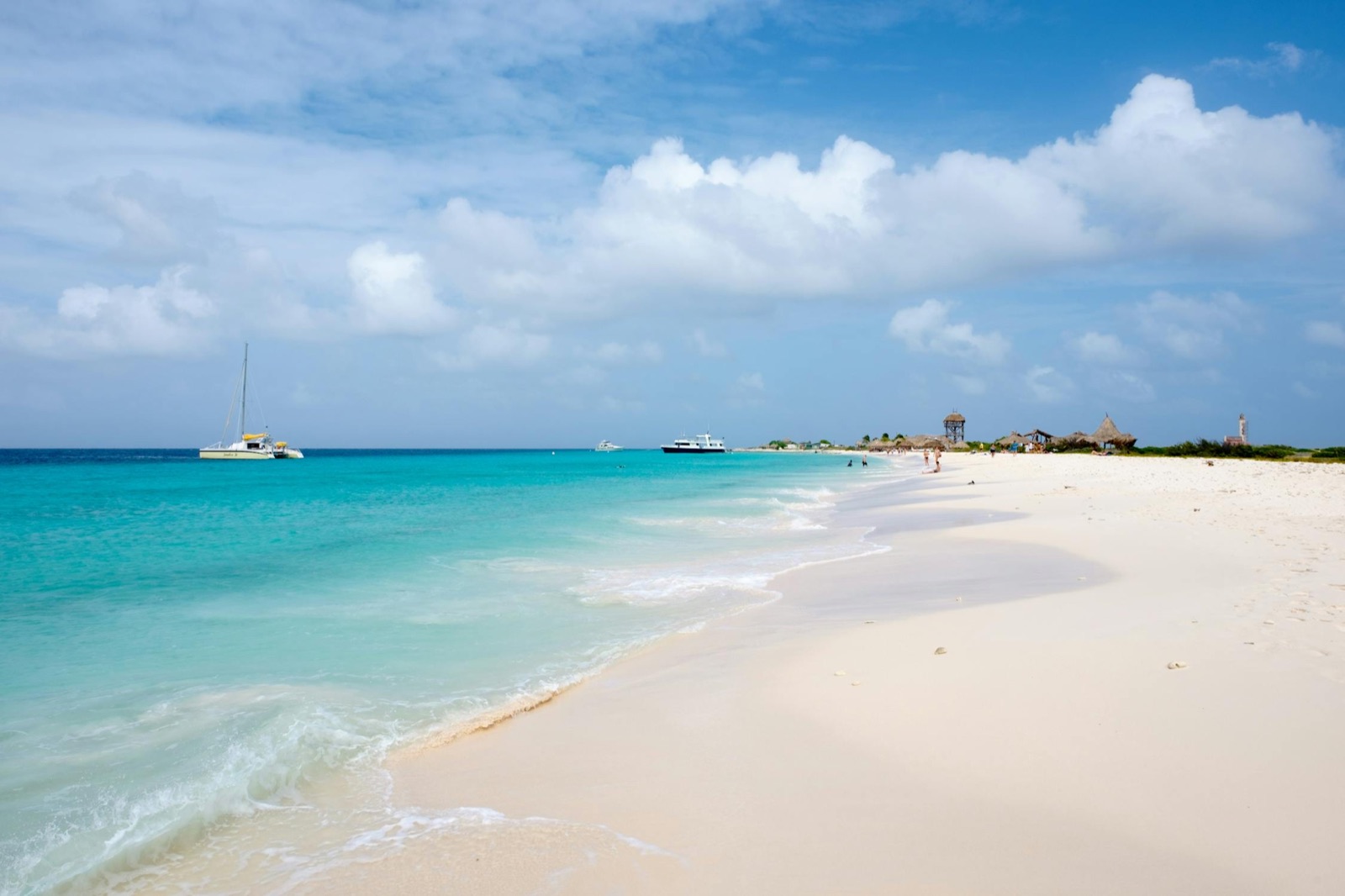
The British Virgin Islands are the world's most popular bareboat charter destination and there is a specific reason why. Sixty islands and cays sit in a line along a protected channel, the Sir Francis Drake Channel, with trade winds that blow reliably, distances that are short, holding that is good, and a level of cruising infrastructure (moorings, dinghy docks, beach bars, charter bases) that does not exist anywhere else in the world. The BVI is the easiest place to sail on holiday. It is also one of the most beautiful. This guide explains how to do it properly in 2026.
If you are still weighing the Caribbean against the Mediterranean, read our Caribbean vs Mediterranean sailing comparison first. This article assumes you have decided the Caribbean is where you want to be and the BVI is the specific destination.
Why the BVI Is the World's Favourite Bareboat Destination
Three things make the BVI unique.
The geography. The Sir Francis Drake Channel is 20 miles long and about 2 miles wide, surrounded by islands on both sides. It is essentially a sheltered cruising ground inside a natural hurricane hole. Line-of-sight navigation works everywhere. You never lose sight of land. Anchorages are a short sail apart. You can see where you are going without a chart.
The trade winds. The easterly trade winds blow steadily from December through May, usually 15 to 20 knots, occasionally 25. They come in from the east and fill the channel every day. This means you can sail properly, not motor, for almost every leg. For bareboat charterers with some experience, it is some of the best reaching and beam-reaching in the world.
The infrastructure. Every good anchorage has moorings. You rarely anchor in the BVI; you pick up a mooring ball. Cost is 30 to 45 US dollars a night. There is a dinghy dock at every beach bar. There is a beach bar at every anchorage. There is a charter base with repairs and parts within a few hours of any location. Nothing in the Med comes close to this level of convenience.
What It Actually Costs in 2026
BVI charter pricing works on a high-season vs low-season split. Hurricane season is the low season.
| Yacht type | Size | High season (Dec-Apr) | Low season (Jun-Oct) |
|---|---|---|---|
| Bareboat monohull | 40-45 ft | 6,500-9,500 USD | 3,500-5,500 USD |
| Bareboat catamaran | 42-48 ft | 9,500-14,000 USD | 5,700-9,000 USD |
| Bareboat catamaran | 50-55 ft | 14,000-22,000 USD | 8,500-13,000 USD |
| Crewed catamaran | 50-55 ft | 20,000-35,000 USD | 13,000-22,000 USD |
| Crewed motor yacht | 25-30 m | 85,000-140,000 USD | 55,000-90,000 USD |
The BVI is significantly cheaper than the Mediterranean in equivalent quality. A 45-foot catamaran that would cost 14,000 euros in Croatia in August costs about 10,000 US dollars (9,300 euros) in the BVI in March. You are also comparing the best of the Caribbean season to the most crowded week of the Med season.
What to budget on top of the charter fee:
- Mooring fees: 30 to 45 USD per night, so roughly 200 to 300 USD for a week
- National park fees: 4 USD per person per day, about 100 to 200 USD for a family-sized group for a week
- Fuel: 150 to 300 USD for a light week of sailing
- Water and ice: 50 to 100 USD
- Provisioning: 350 to 500 USD per person per week for full self-catering (we cover this in our provisioning guide)
- Meals ashore: 40 to 80 USD per person per meal
A week-long bareboat catamaran charter for six adults in the BVI will typically cost, all in (charter, mooring, fuel, provisions, meals ashore, tips): between 2,500 and 4,500 USD per person in low season and 4,000 to 6,500 USD per person in high season.
Hurricane Season and When to Go
This is the most important practical decision for a BVI charter. Get it wrong and you are either refunded and disappointed or in a real weather situation on a holiday boat.
December to April: Christmas and the high season. Dry, warm (26-30 degrees), easterly trades, minimal rain. Water temperature 25-27 degrees. This is the golden window and the whole world knows it. Prices are at their highest. Charter companies are fully booked a year out for Christmas and school holiday weeks. Book 10 to 14 months in advance for these weeks. Our best time to book guide explains the booking calendar in detail.
May: the shoulder. Still good weather, still low rain, prices dropping by 15 to 25 per cent from high season. Water warm. Fewer crowds. Some of the best value of the year for anyone who can travel in May.
June to November: low season, hurricane season. This is a real consideration. Hurricane season officially runs June 1 to November 30. In practice, the peak risk is late August through early October. Early June and late November are often fine.
Charter companies will charter through most of low season, but many offer reduced fleets or close certain bases from September to mid-November. Insurance and cancellation cover becomes more important. Read our yacht charter insurance guide for the specific cover you need for hurricane-season bookings.
The honest advice: unless you have a specific reason to book a hurricane-season week, book December to May. The weather, the crowds, the lower hassle are worth the premium. If you must book a low-season week, aim for early June or mid-November.
The Base: Tortola
Almost every BVI charter starts at one of two marinas on the south coast of Tortola, the main island.
Wickhams Cay II (Road Town). The largest charter base in the Caribbean. The Moorings, Sunsail, Dream Yacht Charter and several smaller operators all base out of here. The marina has a provisioning service (Bobby's Marketplace), a supermarket, boat equipment shops, a laundry, and easy taxi access to the airport. If you are on a bareboat, you almost certainly start here.
Nanny Cay. Quieter, southwest of Road Town, with a smaller cluster of charter operators (BVI Yacht Charters, Conch Charters, some crewed boats). Good pool and dining, less intense than Wickhams Cay.
Tortola Airport (Beef Island). The main airport for the BVI, on the east end of Tortola. Flights from San Juan (Puerto Rico), Antigua, St. Maarten, and occasional direct flights from the US. From London, most charterers route via Miami or Antigua. Total travel time 12 to 15 hours from the UK.
Arrival logistics. Plan to arrive a day early and spend the night in Road Town. Jet lag is real and you do not want to board the boat after 12 hours of flying. Most charter companies offer hotel packages or work with partner hotels (Village Cay, Fort Burt).
The Seven Places You Must Go
The Bight, Norman Island. The classic first-night anchorage, 5 nm across the Sir Francis Drake Channel from Tortola. Large mooring field, Pirates Bight beach bar (famous) and Willy T (also famous, a floating bar and grill permanently moored in the bay). The Indians, just west of The Bight, is the best snorkelling in the BVI: rock pinnacles rising from the sea floor, schools of fish, easy conditions.
The Baths, Virgin Gorda. The single most famous anchorage in the Caribbean. Giant granite boulders rising out of the sand on the southwest corner of Virgin Gorda, forming sea caves and grottoes you can swim through. Day moorings only (no overnight), but you must include a few hours here. Arrive early (before 9 am) to get a ball before the day-tripper boats arrive, swim ashore, explore the boulders, leave by 1 pm. Then move to Spanish Town or Savannah Bay for the night.
Spanish Town, Virgin Gorda. Good marina and anchorage on the west side of Virgin Gorda. Good for provisioning, good restaurants, good launching point for the Baths.
North Sound, Virgin Gorda. A large protected sound on the north end of Virgin Gorda. Home to Bitter End Yacht Club, Saba Rock, Leverick Bay and the famous Necker Island (visible on the horizon, owned by Richard Branson, not landable). North Sound is a night that every week should include.
Jost Van Dyke. The party island. Great Harbour on Jost Van Dyke has Foxy's (legendary beach bar, run by the man it is named after, who is still there most days). White Bay on the south side has the Soggy Dollar Bar (inventor of the Painkiller cocktail, swim ashore to pay and collect). If your week does not include two nights on Jost Van Dyke, you are doing it wrong.
Anegada. The one truly flat island in the BVI, a coral atoll to the north of the main island chain. Famous for its barrier reef, spiny lobster dinners, and total disconnection from the rest of the BVI (no crowds, no noise). Anegada requires deeper planning because you need to navigate the reef approach carefully. Some charter companies restrict Anegada for less experienced bareboaters. If you are confident, include it.
Cooper Island. A small island halfway back from Virgin Gorda to Tortola with one of the best beach bars in the BVI (Cooper Island Beach Club) and a gorgeous mooring field. Good low-key night.
A Practical Seven-Day Itinerary
This is the standard BVI bareboat week starting and ending at Wickhams Cay II, Tortola.
Day 1 (Saturday): Tortola base to The Bight, Norman Island. Board in the afternoon (most bases open boats at 4 pm), provisioning run, short briefing, 5 nm across the channel to Norman Island. Pick up a mooring at The Bight, dinghy to Pirates Bight or Willy T for dinner. First swim, first painkiller. 5 nm.
Day 2 (Sunday): Norman Island to Cooper Island via The Indians. Morning at The Indians (snorkel rock pinnacles, day mooring). Lunch on board underway. Afternoon sail to Cooper Island. Mooring at Manchioneel Bay, dinner ashore at Cooper Island Beach Club. 10 nm.
Day 3 (Monday): Cooper Island to Virgin Gorda and The Baths. Early start, motor sail east to the Baths. Pick up a day mooring before 9 am, spend two to three hours at the Baths exploring the boulders. Midday, move on to North Sound. Pick up a mooring at Leverick Bay or Bitter End Yacht Club. Evening ashore at Bitter End. 15 nm.
Day 4 (Tuesday): Anegada. If you are allowed and confident, this is the day. Morning sail north to Anegada, 15 nm across open water. Careful approach to the anchorage off Setting Point. Afternoon at Loblolly Bay or Cow Wreck Beach. Evening: lobster dinner at Anegada Beach Club or Potter's By The Sea. This is a highlight day. If Anegada is off-limits, spend another day in North Sound exploring Bitter End and the surrounding reefs. 15 nm.
Day 5 (Wednesday): Anegada to Jost Van Dyke. Long sail back to Jost Van Dyke via the north side of Tortola. 25 nm. Anchor in Great Harbour or Little Harbour. Foxy's for dinner.
Day 6 (Thursday): Jost Van Dyke, all of it. Morning at White Bay and the Soggy Dollar. Lunch at Ivan's Stress Free Bar in Little Harbour. Afternoon at Sandy Cay (small uninhabited island with white-sand beach and perfect swimming). Evening back in Great Harbour. 5 nm day, maximum beach time.
Day 7 (Friday): Jost Van Dyke to Tortola West End. Short sail back along the north coast of Tortola. Stop at Cane Garden Bay (iconic Tortola beach) or Smugglers Cove. Final evening back to Soper's Hole on the west end of Tortola for a quiet night before check-out. 10 nm.
Day 8 (Saturday): Soper's Hole to Wickhams Cay, disembark. Short run back to base. Off by 10 am. 6 nm.
Total: approximately 85 to 100 nautical miles over seven days, most of it downwind or reaching. Easy, scenic, and exactly what a BVI week should feel like.
Practical Notes
Charter companies. The Moorings (largest fleet, highest prices, best support), Sunsail (good value, smaller boats), Dream Yacht Charter (good catamarans at competitive prices), BVI Yacht Charters (boutique, good service, small fleet), MarineMax (high quality, premium). All are credible. For a first BVI charter, go with The Moorings or Sunsail because the support infrastructure is thickest.
Sailing level required. Bareboat in the BVI is suitable for intermediate sailors with prior yacht charter experience. You need to be comfortable with mooring pickups (not anchoring), reef navigation around Anegada, and trade-wind sailing in 15 to 25 knots. If this is your first charter ever, consider booking a skippered week. Our bareboat vs crewed guide covers the options.
Provisioning. Bobby's Marketplace is the standard BVI provisioning service. Order at least a week in advance, delivered to the boat on day one. Expect to spend 350 to 500 USD per person for the week including drinks. For more on this, see our provisioning guide.
Currency. US dollar. Everyone takes cash and cards, though some smaller beach bars on Jost Van Dyke prefer cash.
Entry requirements. UK passport holders do not need a visa for the BVI but must have six months' passport validity. Arrival tax of around 30 USD per person applies. Check the BVI tourism website for current entry rules before you travel.
Money to carry. Budget 500 USD in cash per couple for the week for taxis, small beach bars, tips, and the rare spot that does not take cards.
Tipping. Standard US-style tipping: 15 to 20 per cent at restaurants, 1 to 2 USD per drink at bars, 5 to 10 USD per day to mooring boys at some locations. Our tipping guide has the full crewed charter numbers.
Health and safety. Very safe. Clean water. Dengue and Zika are present but rare. No malaria. Hospitals are basic; serious medical cases go to Puerto Rico or the US. Travel insurance with medical evacuation is essential.
Who the BVI Is For
Bareboat charterers who want the easiest sailing in the world without compromising on scenery. Families who want reliable weather, short distances, and beach bars every few miles. Groups who want a social charter but not the intensity of Ibiza or St Tropez. Couples who want a quiet charter but still want to eat ashore and meet people at beach bars. Sailors who want proper trade-wind sailing without the logistics of the open ocean.
Less ideal for: people who want deep-sea fishing or open-water sailing challenges (the BVI is too protected), people who want European food and wine culture (Caribbean food is good but different), people who want to avoid sailing in a fleet (every anchorage has other charter boats, and Christmas week is crowded everywhere).
How Sulu Helps
For the BVI, the single biggest mistake first-time bookers make is booking the wrong charter company or the wrong boat for their experience level. There is a big difference between Moorings 4500 catamarans and Sunsail 404 monohulls and a boutique crewed Lagoon 52. We know the fleet, we know which boats get reliable maintenance, and we know which bases are better for which kind of week.
Tell us the group, the experience level, the dates, and whether you want bareboat or crewed. We come back with three options within 48 hours including the boats actually available on your dates (BVI high-season availability is often much tighter than it looks on the booking sites). Message us on WhatsApp or Telegram.